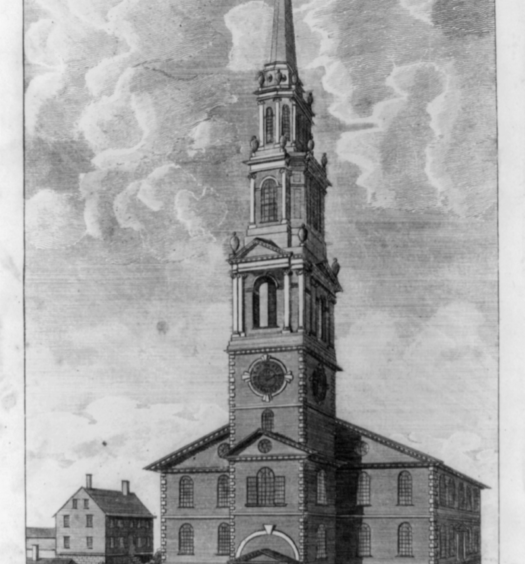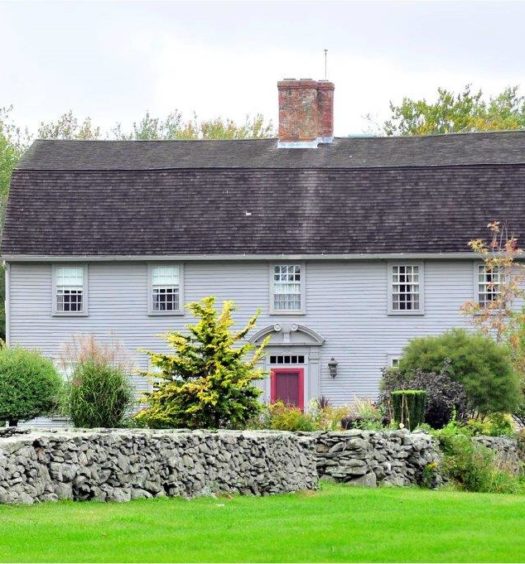


For all that has been written about Newport and Aquidneck Island during the Revolutionary War — three years under British and German occupation, war’s first major joint Franco-American operation, the largest battle in New England, and a French army encamped for a winter, the— the mainland towns just across the water have received far less attention. Steven Lubar’s new book, Remembering the Revolution: Little Compton, Rhode Island, fills a real gap, and it does so with an uncommonly personal approach: rather than retell the war’s familiar chronology, Lubar builds his account around the ordinary residents of a single town.
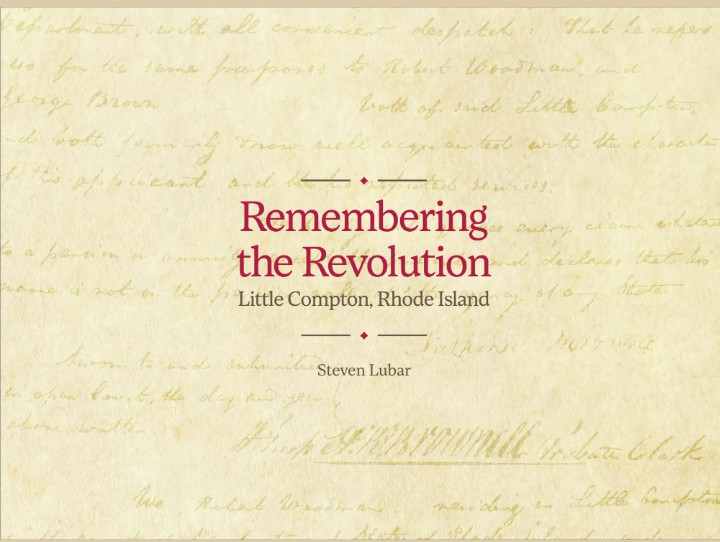
Published by the Little Compton Historical Society with a foreword by Executive Director Marjory O’Toole, the book is well researched, well organized — mainly in chronological order — and well written. It is also lavishly illustrated, filled with images that reward slow reading as much as the text does.
The introduction sets up the approach clearly: this is a book built on first-person accounts, recorded at a time when Little Compton residents still remembered the war as they had lived it. Recent preservation efforts, especially the digitization of National Archives pension records, gave Lubar access to 80 of the estimated 200 Little Compton residents known to have served—a research base broad enough to let ordinary participants, not just officers and dignitaries, narrate their own experience.
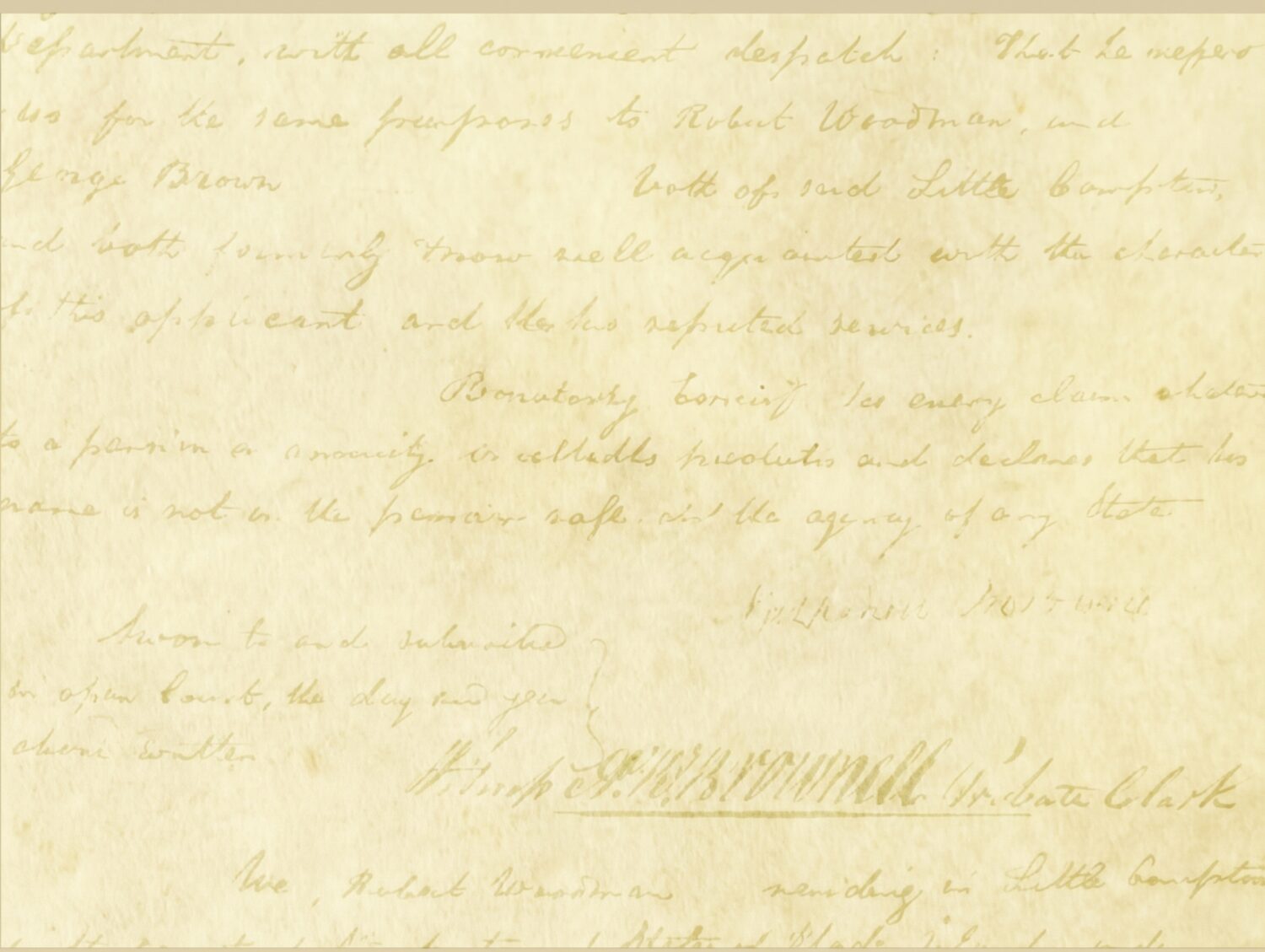
According to Revolutionary War historian Christian McBurney, the federal government began paying monthly veteran’s benefits in 1818, but only for soldiers who could prove that they were in difficult financial circumstances. The federal government began to pay monthly benefits to all veterans in 1832, regardless of financial circumstances. Veterans (or their wives) had to establish that the soldier served at least six months in Patriot regiments or companies. This was relatively easy for those serving in Continental army regiments, such as the 1st and 2nd Rhode Island Regiments of Continentals, since they kept good records. Such was not the case for many of the Little Compton residents who served in local companies patrolling the coastline. As a result, in the effort to establish that the men met the six months service requirement, many of the pension applications for these veterans contain letters and sworn affidavits that provide interesting details of life in Revolutionary Little Compton. In the 1850s, spouses of veterans were also entitled to pension benefits, adding to the available recollections.
The book’s major sections trace that experience from before the war through its long aftermath: “We Will Stand Ready with Our Lives and Fortunes: Before the War,” “In Almost a Continual Alarm: The War in Little Compton,” “We Never Were Safe: Life in a Time of Terror,” “To Stand Guard on the Shores: Defending Little Compton,” “To Go a Soldiering: Little Comptoners and the Wider War,” and a closing roster, “Little Compton Revolutionary War Veterans.” True to that balance, the great bulk of the book is devoted to the war years themselves and to the pension records that reconstruct them, rather than to the prewar chapter that opens it.
Little Compton was never occupied the way Aquidneck Island was, but Lubar makes clear that the town paid its own price for sitting across the Sakonnet River (then called the East Channel) from British-held Newport. Frequent British “visits,” especially by Loyalists (supporters of the Crown) based in Newport—raids for livestock and supplies, and the ever-present threat of a landing with a more sinister intent—kept the town in what one chapter title calls “almost a continual alarm.” Little Compton’s residents organized their own coastal defense in response, including setting up guard houses along the coast (Lubar has a map of their names and locations).
One of the book’s more striking research threads reaches back to 1853, when Horace Gaylord was collecting firsthand recollections of the war in Little Compton to support the pension application of his mother-in-law, Theody Davis, the wife of Major John Davis, formerly of Little Compton. He interviewed the few survivors of the war from the town while their memories were still there to record. The effort worked—Theody Davis received her increased pension.
Remembering the Revolution does not need to be read cover to cover to be appreciated. It rewards dipping into individual sections and individual lives. Readers can learn of thirteen-year-old Joseph Church, who stood guard duty for the town; of Sippo Cook, an enslaved man who joined General Sullivan’s 1778 expedition against the British in hopes of winning his freedom; of Thomas Bailey (in his sixties) and Cushing Richard (ten years old), who were captured on the beach at Warren’s Point and sent off to prison ships where Cushing died at 14 years old; and of the Black and Wampanoag soldiers of the First Rhode Island Regiment, whose service is woven throughout the book rather than set aside in a chapter of its own.
A small but effective design choice deserves mention: rather than surrounding quoted material with quotation marks, Lubar sets it in red type. It is a simple device, but it lets long stretches of first-person testimony run cleanly on the page, avoiding the visual clutter that quotation marks can create over so many quoted passages. The book’s design and collection photography, credited to Chris O’Toole of COT Design, match the care given to the text. Some of the images are from the Little Compton Historical Society’s outstanding collections. This is a volume meant to be looked at as much as read.
The closing “Little Compton Revolutionary War Veterans” roster, followed by Sources & Further Reading, Index, Acknowledgements, and Sponsors, rounds the book out as a reference as well as a narrative. Genealogists and local historians will find it as useful for looking someone up as general readers will for reading it straight through.
Remembering the Revolution: Little Compton, Rhode Island is a welcome and genuinely original contribution to Rhode Island’s Revolutionary War literature. It is not another survey of the war’s set-piece events, but a record of how one town’s people, free and enslaved, young and old, actually lived through it. It belongs on the shelf of anyone with an interest in Revolutionary Rhode Island, and is among Little Compton Historical Society’s many significant accomplishments. It is a great model for other Rhode Island towns.
Steven Lubar, Ph.D., is Past President of the Little Compton Historical Society and George L. Littlefield Professor of American History, emeritus, at Brown University. He earned his doctorate in history from the University of Chicago and, before joining Brown, spent nearly two decades at the Smithsonian’s National Museum of American History, where he served as a curator and chaired the Division of the History of Technology. A Guggenheim Fellow, Lubar has written extensively on American history, museums, material culture, and public history. His books include Inside the Lost Museum: Curating, Past and Present, Legacies: Collecting America’s History at the Smithsonian, and Engines of Change: The American Industrial Revolution.
The Author

You Might Also Like