

During the American Revolutionary War, in May 1781, elements of the Rhode Island Regiment of Continentals were manning posts along the Croton River in Westchester County in New York State. South of the river was the neutral ground, over which Patriot soldiers and Loyalist militants fought bitterly. The Loyalists, called DeLancey’s Westchester Refugees, were based in huts in and around Morrisania, in what is now the Bronx, in New York City. The British army occupied Manhattan Island. Many of the Refugees had fled their homes in Westchester County and were angry about it. They were typically led in their raiding operations by Captains Moses Knapp and Samuel Kipp, and Lieutenant Gilbert Totten.
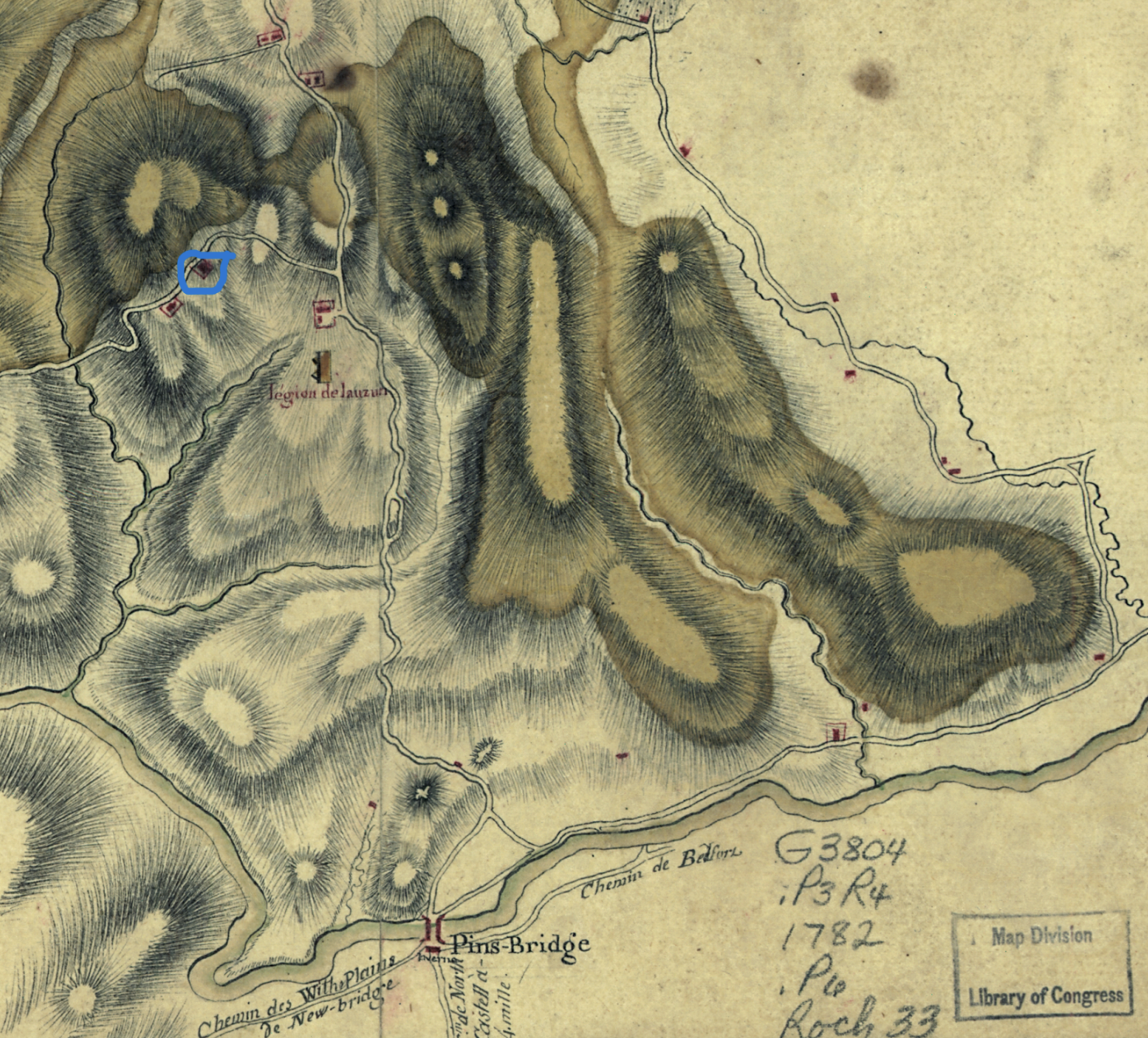
This excerpt from a French army map, made in 1782, shows Pines Bridge at the bottom and the location of the Davenport House is circled in blue (Position des Armées amériquaine et françoise à Kings-ferry, Peaks-hill, Crompond et Hunts-taverne du 17 septembre au 20 octobre 1782, Control Number gm71000998, Geography and Map Division, Library of Congress)
The Rhode Island Regiment of Continentals was formed in early 1781 by the merger of the 1st and 2nd Rhode Island Regiments of Continentals. The 1st Rhode Island had been reestablished as a segregated regiment in February 1778, the American Revolutionary War’s only one. Most of the soldiers in the regiment had been enslaved and obtained their freedom by enlisting in the 1st Rhode Island. The regiment also had a cadre of Black, Indian (mostly Narragansett), and multiracial men who had been free when they enlisted in either the 1st or 2nd Rhode Island in early 1777. Many of them were veterans of the surprise victory at the Battle of Red Bank and fierce action at the Battle of Monmouth. The entire regiment had fought courageously at the Battle of Rhode Island on August 29, 1778. The 2nd Rhode Island consisted only of White soldiers. When the Rhode Island Regiment was formed in early 1781, two of the regiment’s nine companies were segregated and manned only by privates and musicians of color (with commissioned and non-commissioned officers being White men). All of this will be presented in more detail in my upcoming book, An Unfinished War: A History of Rhode Island’s “Black” Regiment” in the American Revolution.
Shortly after sunrise on May 14, 1781, a large detachment of DeLancey’s Loyalist Refugees conducted a surprise raid on the Continental army’s positions at the advanced posts at and near Pines Bridge in Westchester County, New York. The Loyalists attacked two posts: the Davenport House, where Colonel Christopher Greene, Major Ebenezer Flagg, and a sergeant’s guard from the Rhode Island Regiment were sleeping, and Pines Bridge, where Ensign Jeremiah Greenman and another sergeant’s guard were posted. The attackers shot and hacked to death Greene, Flagg, and six rank-and-file soldiers—apparently all at the Davenport House. Five other privates were wounded; two died within ten days of the surprise attack. The raiders also carried back with them as prisoners four officers, one sergeant, and twenty-seven rank and file.
Four of the six rank and file killed, and the two mortally wounded privates, were soldiers of color from the Rhode Island Regiment. One of the three surviving wounded was a private of color. Five of the twenty-seven rank-and-file prisoners were soldiers of color from the regiment.
In his general orders for May 17, 1781, General Washington referred to “the disaster of the 14th Instant.”[1] It was by far the worst day of the war for the soldiers of color who had enlisted in the 1st Rhode Island Regiment in 1777 and 1778.
While many of the particulars of the raid are known, what exactly transpired at the Davenport House and at Pines Bridge remains shrouded in mystery. Many of the histories of the raid have relied on the recollections of local citizens written down by interviewer John McDonald from 1844 to 1848, more than sixty-four years after the event. These recollections from the so-called “McDonald Interviews” are not always dependable and are sometimes inconsistent with each other. On the other hand, they sometimes contain useful and vivid details found nowhere else. A few of the recollections were made by eyewitnesses, even if they were children at the time of the raid.
John McDonald of White Plains from 1844 to 1848 interviewed surviving eyewitnesses and the descendants of parents and relatives who had lived in Westchester County during the Revolutionary War. Parts of the interviews have been published, but transcriptions made in nineteenth-century books are not always reliable. The Westchester County Historical Society happily had the transcriptions of the interviews made available digitally online in 2025.[2]
My book, An Unfinished War: A History of Rhode Island’s “Black Regiment” in the American Revolution, is intended to be a complete history of the regiment. The book’s longest chapter is about the Pines Bridge Raid. Most of the chapter is based on contemporary letters or recollections and diaries. My publisher determined (probably wisely) that I had to cut from the book much of the material on the McDonal Interviews. It just made the chapter too long. Still, the material in the McDonald Interviews that I cut out, as you will read below, is of great interest (as well as are some other recollections set forth below that also had to be left out of the book or dramatically cut back). This article has most of that material that was omitted from the Pines Bridge chapter.
Given that the McDonald Interviews occurred more than sixty-four years after the raid and most of them are based on second-hand information, one must be skeptical of the accuracy of the recollections. Still, some may be accurate and provide vivid details of the action at the Davenport House. A recollection could be accurate in one part and inaccurate in another. If there is other contemporary support for a claim, that makes the account more credible.
On the other hand, some of those interviewed for the McDonald Interviewers were descendants of some of DeLancey’s raiders and therefore may not have wanted to put them in a bad light. Blaming the dead Christopher Greene or other absent Continental officers or soldiers of color was convenient for maintaining peaceful relations in postwar Westchester County.
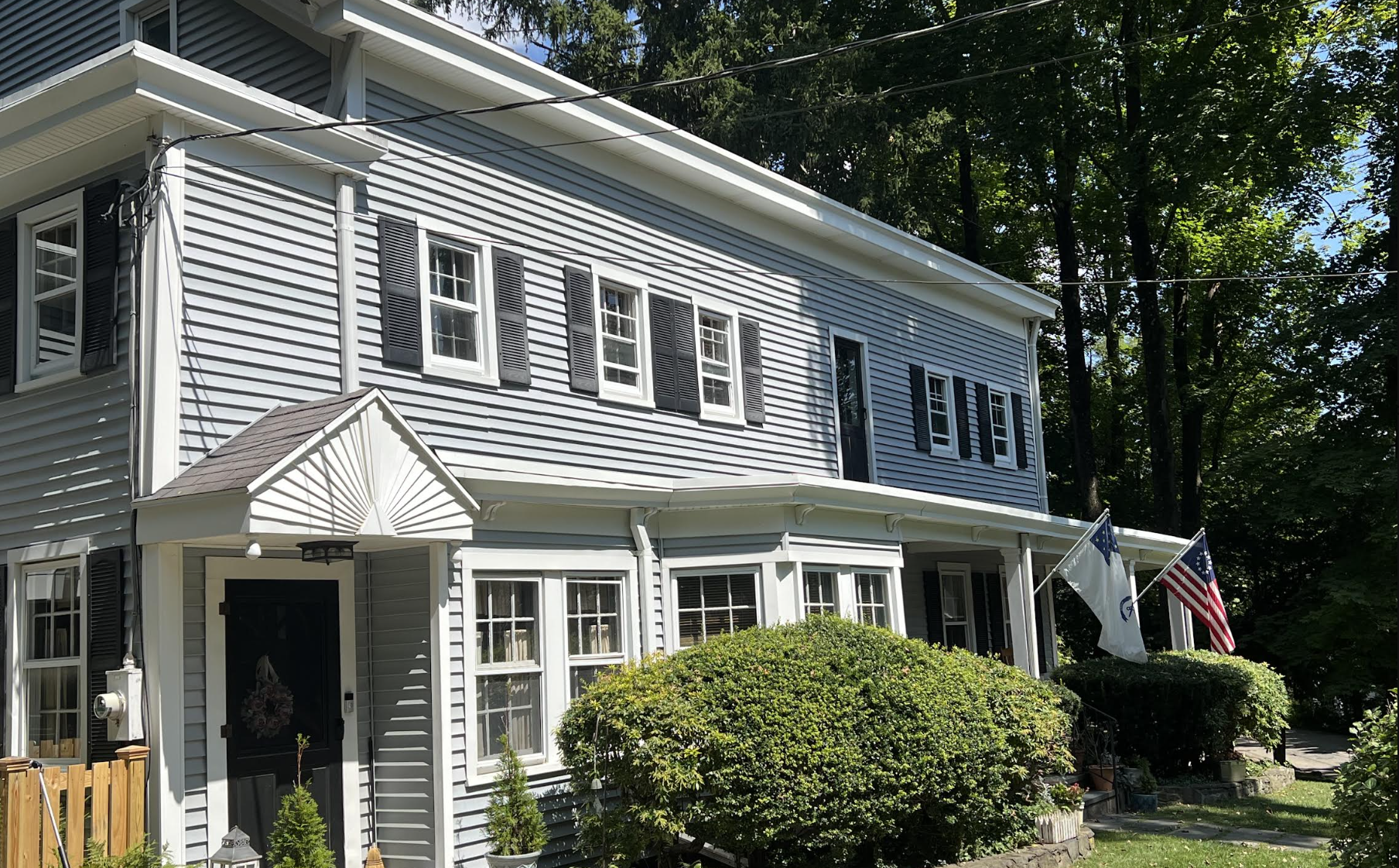
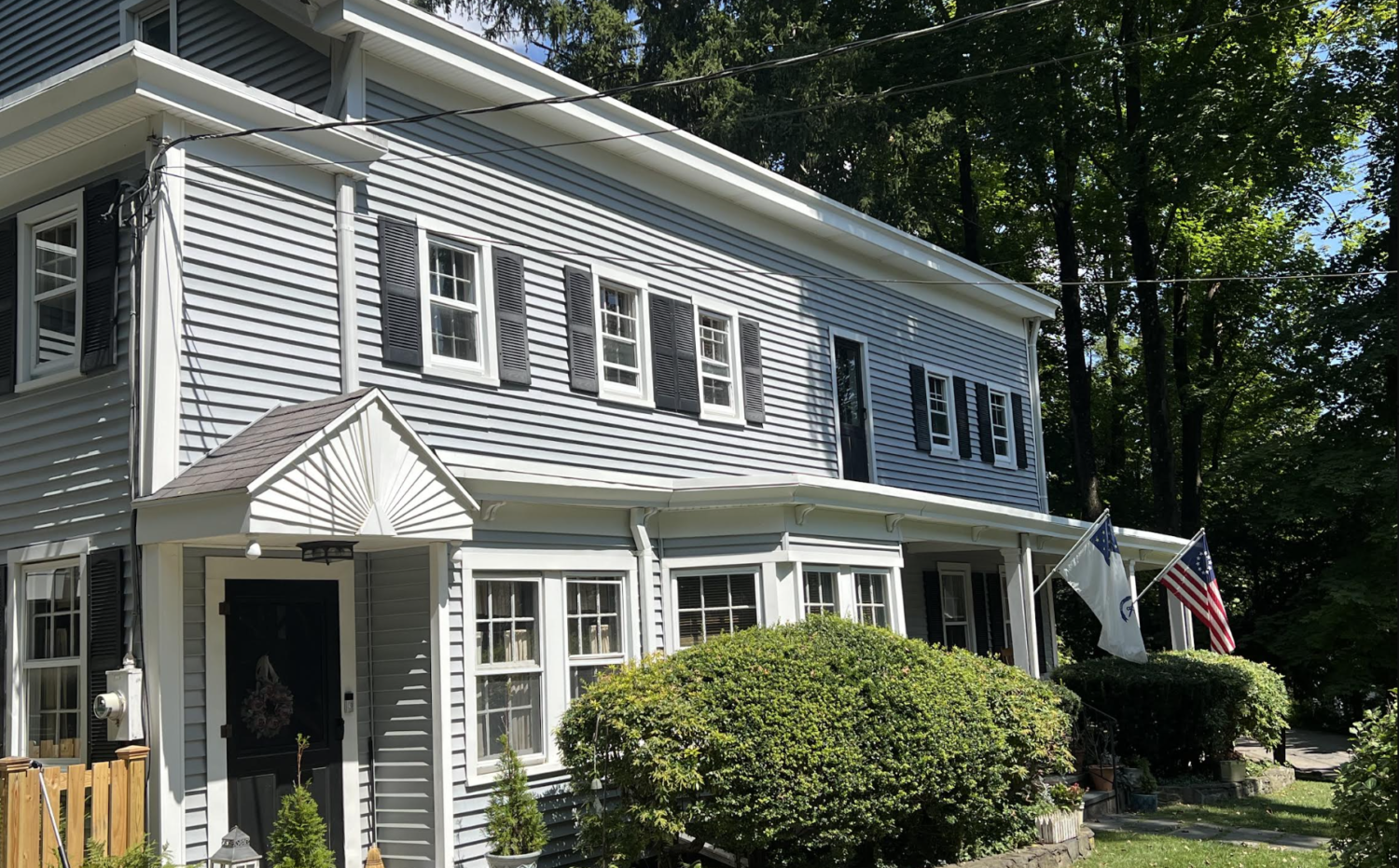
The Davenport House, sitting today north of Croton Heights Road. In 1781, it stood south of the road so that this side was the rear of the house. The house is much changed since 1781 (Christian McBurney)
The following is one example of the tender feelings for Loyalist Refugees held by many in the neutral ground. In his reminiscences of the war, Asa Redington of the New Hampshire Continentals recalled joining as a private in a raid against Refugees and bringing back some of them as prisoners through the neutral ground to the important American post at West Point. Redington wrote, “In passing through the country the prisoners . . . frequently met their old friends, fathers, mothers, brothers and sisters” who “eagerly” rushed into the street to greet them. He continued, “Their case excited much sympathy, and many tears were shed by their friends.”[3]
Two recollections are from Joshua Carpenter, a grandson of the man who owned the Davenport House on May 14, 1781, where most of the casualties occurred. Carpenter was about fifty-eight when he gave his interview in 1845—at the Davenport House, where he was born in 1787. His grandfather, Richard Davenport, was in the eastern section of the house at the time of the raid. Carpenter said the house was “about one mile” from the ford crossed by DeLancey’s Refugees and two-and-one-half miles to Pines Bridge. He continued:
The following are particulars of Greene’s disaster, as I have heard them from my ancestors at various times, and particularly from my grandfather, who lived here at the time. A party of DeLancey’s Refugees (under Kipp I believe) crossed the Croton at Blenis’s [Oblenis] ford and got to the house unperceived. They came up on the west side of the house, where only a single sentinel was posted and who did not see them until they were near him, but who then fired. Some soldiers lying down and sleeping on the stoop (south side of the house) also fired. Greene and Flagg both sprang up. The former encouraged the soldiers to defend themselves, saying, “They’re only a few cowboys. Fire away, boys, fire!” Flagg advanced at the same to the west window with a pistol in each hand and fired upon the enemy. He was answered by a volley and fell dead pierced by several balls. The Refugees at the same time burst open the north door and fired in, thus making a cross fire. You see five or six holes yet remaining in the doors and panel work. Greene, a large, powerful man, met the enemy at the north door and attempted to defend it sword in hand. He struck at Totten, who was foremost, with all his might and would have killed him on the spot had not the blow been parried by one of the Refugees. As it was Totten was stunned and wounded. Greene in the conflict received several shots and was lamentably cut and hacked with the sabre. He then asked for quarter and it was granted. Then for his parole which was refused. They told him he must go with them to Morrisania, and mounted him behind a dragoon for about a mile and a half or more, and then fell off where you descend a hill a little northwest of the Widow Griffen’s. Finding that he was dying they did not attempt a further removal, but left him by the road side with his head upon a bank of earth.
The Davenport House was built by my grandfather in 1773, and painted in 1776. . . . It is a double house standing upon a slight declivity, two stories high, a hall through the center of the first story and the rear of the second story opening upon the ground through a door which now remains. Greene and Flagg occupied the northwest bedroom of the second story (which now is partitioned into two bedrooms) sleeping in the same bed.
The Refugees fired into their bedroom through the west window, which is now closed up, and through the north door which remains as it was.[4]
Some of the claims sound credible, such as the recollections of the single sentry firing his musket and dashing toward the house, and the other sentries on the porch firing their muskets and fleeing for the orchard (and ultimately, the woods). Also credible is the last comment, that the raiders fired through the west window and the north door—thus firing through a closed door without even seeing the enemy inside. More controversial are the claims that Greene encouraged his men to fight and that Flagg fired his two pistols from the west window. If such claims are true, it would justify to some extent the brutality that DeLancey’s raiders showed the officers and soldiers in the Davenport House’s second-floor bedroom, where most officers and soldiers were either killed, mortally wounded, or wounded. It seems unlikely, however, that Greene awoke so quickly from his slumber to yell encouragement to all the men and it is not clear at all that Flagg fired either of his pistols. There is also no other evidence that Greene wounded Totten.
Robert Bolton, the author of a detailed history of Westchester County first published in 1848 and updated in 1881, said the same Joshua Carpenter provided to him the following summary of the morning’s actions in 1867:
[H]is Aunt Fanny Totten, told him that Gilbert Totten (her cousin) led DeLancey’s party to Davenport’s house, and that the enemy came up (after crossing the Croton River at Oblenna’s [Oblenis] Ford) by way of the valley on the east side of Turkey Mountain, then a perfect wilderness . . . when suddenly they wheeled and galloped up the hill, surprising the sentinel who fired and fled towards the house. The American soldiers were lying on the stoop when alarmed by the firing on the west side. Some managed to escape by jumping off the east end of the piazza and making for the orchard in the rear. When the firing first began, the sun was about an hour high. The sliding of the window by Major Flagg first attracted the enemy’s attention and induced them to fire into that part of the house.[5]
This second recollection, from 1867, which is based on the recollections of Gilbert Totten’s cousin, has more credibility than the one Carpenter prepared in 1845 based mostly on the recollections of his grandfather, Richard Davenport. The two accounts have much in common, thus giving both accounts credibility in those respects. But this second recollection is an objective account that has no embellishments about Greene verbally encouraging his men to fire at the enemy, Totten getting wounded, and Flagg firing his pistols out of the west window. I find this second recollection more credible than the first in these details.
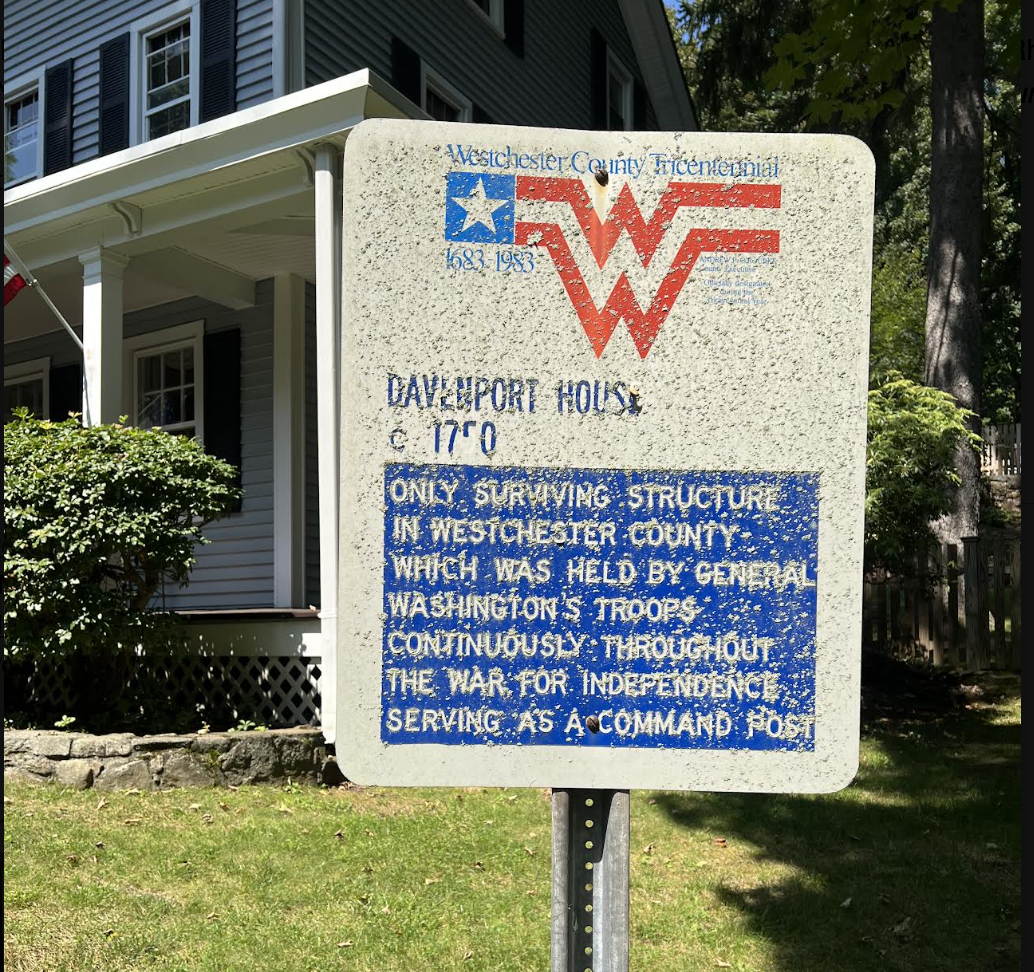
Historic marker outside the Davenport House (Christian McBurney)
Lydia Vail provided two long interviews about the May 14 raid in the McDonald Interviews. Many accounts of the raid rely heavily on her recollections. In 1847, when she gave her first interview, she was seventy-seven. At the time of the raid, she was an eleven-year-old granddaughter of Richard Davenport. What she personally witnessed rings true and provides a sense of the shock neighbors must have felt from news of the raid:
I lived at my father’s half a mile off, northerly on the Crompond Road. Word came to us that they were all cut off and killed at Headquarters, and we all ran through the woods towards Pines Bridge. . . . We arrived at Davenport House about sunrise or a little after and found the floors and walls covered with the blood of the dead, wounded and dying.[6]
Vail also claimed that on many occasions, she heard her grandfather explain what he heard in an adjoining room during the attack. However, these recollections are questionable and so will only be summarized here and not fully repeated. In addition, Vail’s recollections are inconsistent with the recollections that Joshua Carpenter said Richard Davenport told him.
In short, according to Vail’s account based on her grandfather’s stories, the blame for the brutality of DeLancey’s men should go to an unidentified Continental lieutenant who, after hearing DeLancey’s men “calling upon the inmates to surrender” responded by firing his pistols at the enemy. This act enraged the attackers, who “instantly cried out, Kill! Kill! No quarter.” Major Flagg was then said to have exclaimed to the rash lieutenant, “You’ve undone us!” before he was dispatched, “pierced with five or six balls” from Refugee fire. After describing other incidents of the fighting in the bedroom, Vail said, “When I entered the house just after the Refugees had left, the young lieutenant was lying dead on the floor.”[7]
In fact, there were two lieutenants in the Davenport House’s second-floor bedroom that morning. One was Ebenezer Macomber of the Rhode Island Regiment. Letters written by American officers indicate that he was sick and remained in bed, unharmed, during the attack. Macomber was taken prisoner but was not wounded or killed. The other lieutenant was Thomas Cushing of the 1st Massachusetts Regiment. Major Morrell, in his May 14 report, stated that Cushing had been wounded and taken prisoner. He was not killed. And no other recollection reports Lieutenant Cushing firing pistols.
Vail explained the rationale for her version of her story: “After all the circumstances of the surprise of Davenport’s house came to be known and understood, Colonel DeLancey and the Refugees were not blamed. The impetuosity and indiscretion of a single individual [the Massachusetts lieutenant] caused probably all the bloodshed at my grandfather’s.”[8] Vail’s recollections may have been influenced by the fact that she was related to one of the leaders of DeLancey’s Refugees, Gilbert Totten.[9]
Vail added, “I think there were no negroes at Davenport’s House . . . when Greene was surprised.” This curious remark, made at the end of her interview when the topic was not even being discussed, is different from my summary of the raid. I stand by my conclusion in this regard and note the following about Vail’s recollection. First, she was eleven at the time of the traumatic incident and she was recalling it sixty-five years later. Second, earlier in her recollection, Vail recalled, “Two Negro servants of my father were wounded, one in the arm and the other in the shoulder.”[10] So there were “negroes” at the house after all. It is conceivable that she misremembered who the injured men were and that they could have actually been Black soldiers from the Rhode Island Regiment. Third, it seems fairly certain that Prince Childs, Colonel Greene’s personal servant, was mortally wounded in the bedroom. Fourth, Vail recalled seeing “[f]our or five lying dead in the house, and four or five were dead where the tents stood east of the house besides many wounded.”[11] Only five White men were killed on May 14—Greene, Flagg, and two of their personal servants, John Greer and John McDaniel, as well as Private Ebenezer Williams of the 1st Massachusetts. Greene had been carried away by the raiders (still alive, but just barely and soon to expire) by the time Vail arrived at the house. The others killed on May 14 were four Black men—Cato Banister, Africa Burk, Jack Minthorn, and Jeremiah Greene. Accordingly, since Vail claimed she saw a total of eight to ten dead men, about half them must have been Black.
The treatment of the Black soldiers in the McDonald Interviews is inconsistent. Most accounts focus on the Black troops being killed by the raiders, but there is no agreement on just how that occurred. I attribute the inconsistent accounts in part to the trauma of the events, the youth of some of the witnesses, and the events occurring some sixty-five years before the recollections were recorded. But there is another reason too—an excessive fascination by nineteenth-century observers of the role of the Black soldiers that has hindered their objectivity.
Consider the following three recollections regarding the attack at Pines Bridge or the nearby Widow Griffen’s house. They were about two and one-half miles south of the Davenport House. The 1847 interview of James Lyon and James Sutton, both of whom served in the Westchester County militia during the Revolutionary War, revealed the following:
In May 1781 Pines Bridge was guarded by negroes and they were attacked by the Refugees at the same time in the morning that Davenport House was surprised and taken. This negro guard was entirely cut to pieces, but by a different party from that which surprised Greene and Flagg.[12]
James Woods, who was nineteen and living in nearby North Castle when the raid occurred, recalled that a part of the Refugee force “attacked the Widow Griffen’s about a quarter mile” away from Pines Bridge and that at the house “the negroes were cut up unmercifully.”[13] Mary Beagle further recalled, “The Rhode Island negroes who lay about Pines Bridge were very much cut to pieces. They lay for the most part at the Widow Griffen’s” as well as other nearby houses.[14]
The sergeant’s guard at Pines Bridge or Griffen’s house was not “entirely cut to pieces” and it is unlikely that any Black soldiers were killed at Pines Bridge or Griffen’s house. Indeed, according to Ensign Jeremiah Greenman, by far the most reliable source about this incident, he and his sergeant’s guard surrendered without firing a shot and without being fired at or otherwise attacked.[15] I believe most or all of the Black soldiers were at the Davenport House at the time of the raid and not at Pines Bridge or Widow Griffen’s House to the south. It appears that a myth arose about what happened at Pines Bridge and Widow Griffen’s House.
Still, the McDonald Interviews have much interesting material in them, which I include in my chapter on the Pines Bridge Raid. One was a recollection that the sergeant’s guard at Pines Bridge used to take up the wooden slats on the bridge every night and march to the Widow Griffen’s House to spend the night. Other recollections describe the crude huts at Morrisania and the damage done to them from one raid.
*****
The recollections of three Continental army officers should also be considered, even if they were not eyewitnesses. The first author is Major General William Heath, who had worked closely with Colonel Greene in 1780 and 1781 in both Rhode Island and New York. I quote from his memoirs in my book, so I won’t repeat his recollections here.
The second author is Colonel Henry “Light Horse” Harry Lee, the talented Continental army cavalry commander. Lee’s recollections, published in 1812, are generally more accurate regarding matters of which he had personal knowledge than matters about which he had to rely on the reports of others. Lee was not at Pines Bridge on May 14. His description is the only report by a Continental officer that has Major Ebenezer Flagg firing his pistols at the enemy from the bedroom window.[16] This recollection is not as credible as the two contemporary reports that describe Flagg as being shot through the window before he grabbed his pistols.[17]
Lee colorfully wrote of Greene’s stand in the bedroom against onrushing enemy soldiers: “Here the gallant veteran singly received them with his drawn sword. Several fell beneath the arm accustomed to conquer, till at length, overpowered by numbers, and faint from loss of blood streaming from his wounds, barbarity triumphed over valor.”[18] Since there is no report of any serious casualties among the attackers, this recollection too lacks credibility (which, in turn, undermines the credibility of Lee’s account of Flagg firing his pistols). Lee does not mention the stand taken by the Black privates in the bedroom.
Lee did provide an important recollection that he heard firsthand from Greene. This was Greene’s often-stated declaration, following his return from being a captive in Canada for one-and-a-half years, that “‘he would never again be taken alive.’”[19] This recollection is evidence that Greene did not immediately surrender but instead initially resisted the attempt to capture him.
Captain Stephen Olney of the Rhode Island Regiment wrote a recollection of his service during the Revolutionary War and includes the following on the raid at Pines Bridge:
About the break of day a party of British light-horse surrounded their quarters, killed Major Flagg in his room or bed. Colonel Greene discharged his pistols at them, when they inflicted several sabre wounds on him; and then mounting him behind one of their horsemen, bore him off—and when at some little distance, he expired. This was the account as I heard it.[20]
At least Olney admitted to hearing the account secondhand. He was not even in New York state in May 1781.[21] There are a few inaccuracies in the account, including that the attackers were British light-horse cavalry (they were Loyalist militia cavalry and infantry) and that Greene died on the way to Pines Bridge (he died in the woods after being placed there). These inaccuracies undermine the credibility of the statement that Greene fired pistols at his attackers in the second-floor bedroom. This is the only known claim from a Continental soldier that Greene fired pistols in the action inside the bedroom during the attack. The fact that Greene did not injure any of his attackers, despite shooting at close range, is evidence that he did not fire his pistols.
*****
One issue that has concerned students of the Pines Bridge disaster, including historian Judith Van Buskirk, is why such a high percentage of the killed were soldiers of color.[22] An important reason, and one that has not been previously appreciated, is that it appears that the sergeant’s guard at the Davenport House consisted of a White sergeant and from twelve to eighteen Black privates and other soldiers of color. One of Colonel Greene’s personal servants, Prince Childs, was also a soldier of color. Thus, in the early morning of May 14, most of the rank-and-file soldiers at the house, where the most violence occurred, were soldiers of color. Of the six men killed, four were soldiers of color, and two others were so badly wounded that they died within a week of suffering their injuries. One other soldier of color was wounded but escaped capture, while five were captured.
It also appears that most of the killed soldiers of color were in the bedroom at the Davenport House, where most of the carnage occurred. By comparison, it appears that the guards at the Pines Bridge were from the seven companies in the Rhode Island Regiment that contained the White privates. It does not appear that any fighting occurred at or near Pines Bridge.
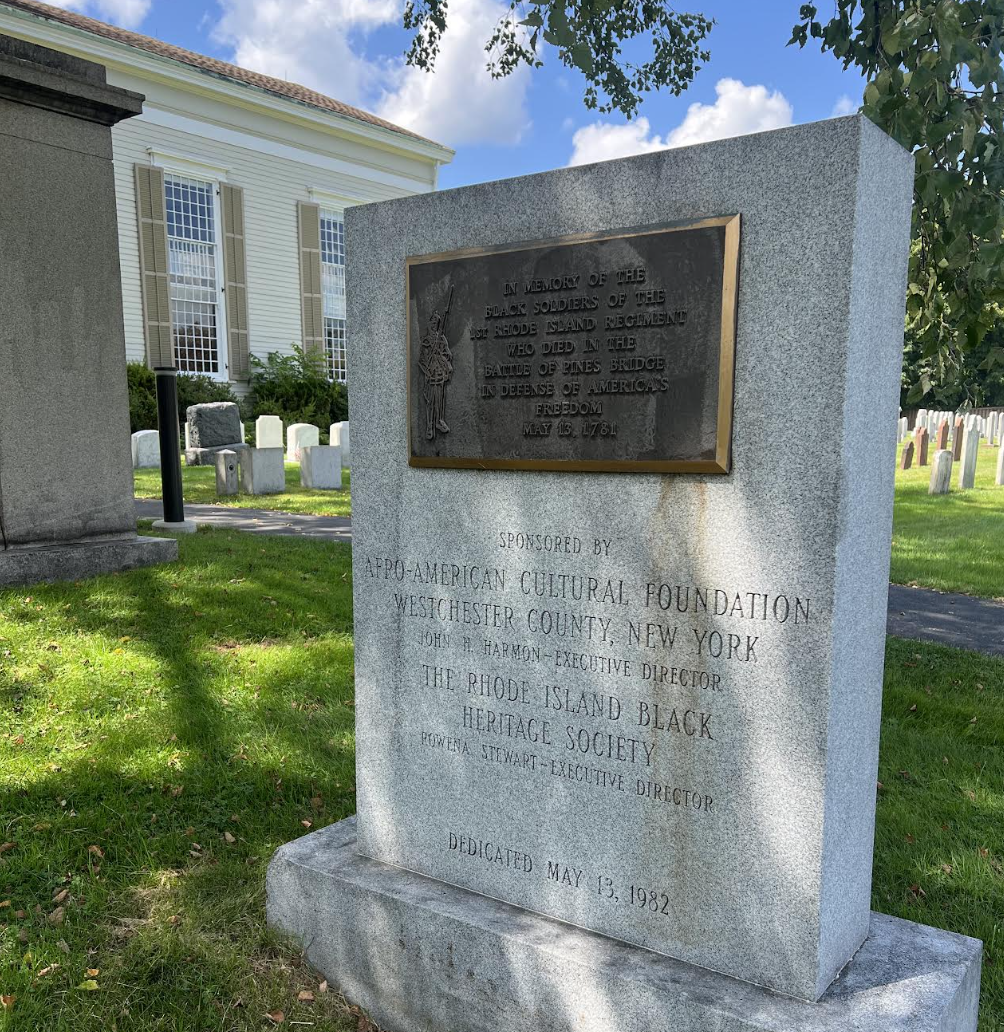
Monument to the Black soldiers of the Rhode Island Regiment who died at Pines Bridge. Sponsored in part by the Rhode Island Black Heritage Society. Dedicated May 13, 1982. Located at the First Presbyterian Church of Yorktown at 2880 Crompond Road, Yorktown Heights, New York (Christian McBurney)
Still, it is certainly possible that the attackers showed more aggression and brutality toward the Black privates and other privates of color than they would have against White soldiers because of their racist views. There are two storylines involving the role of the Black soldiers told by the Westchester County residents in the McDonald Interviews. They could be postwar attempts to justify why so many Black soldiers were killed and maimed.
Samuel Chadeayne, in an 1847 interview, stated that when the American officer at Widow Griffen’s (that is, Greenman) surrendered his guard to DeLancey’s men, he had ordered the soldiers under his command to “ground their arms.” Chadeayne continued:
These were of the Rhode Island Regiment and mostly, if not all, blacks. Two of the blacks refused, said they would defend themselves, and instantly fired upon Knapp’s horse, who was advancing upon the house, wounding Totten in the toe. The black soldiers were now charged and pursued through the fields and slaughtered without mercy.[23]
It is likely that no soldiers of color were killed at Pines Bridge or Widow Griffen’s. Again, according to Greenman, he and his guard surrendered without firing a shot and without being fired at or otherwise attacked.[24] I also believe most or all of the Black soldiers were stationed at the Davenport House. Chadeayne’s story seems to be an attempt to explain why so many Black soldiers were killed—by blaming a few Black soldiers for a rash decision.
Another line of stories from the McDonald Interviews purportedly justifies the brutal treatment received by Colonel Greene and the Black soldiers who were killed or maimed. David Brown told an interviewer that in spring 1781, prior to the raid, Lieutenant Totten had been captured and brought to Pines Bridge. There he had been “put under a guard of negroes,” was refused his request to be paroled, and was treated in other respects “uncourteously.” Brown recalled, “When Totten came to be exchanged, he told Greene he would repay him on the first opportunity.” Apparently, the otherwise amiable Totten considered it an insult to be guarded by soldiers of color, and that was one of the reasons he sought revenge against Greene.
In Brown’s version of the attack on the Davenport House, he has Totten entering the door in the rear of the house and engaging in a sword fight with Greene. After being knocked down by Greene, “Totten rose up and he and several others then attacked poor Greene and wounded him in seven or eight places.” Only then did Greene surrender. A weakened Greene then asked to be paroled, but Totten refused, remembering his own rejected request. In any event, according to Brown, many Westchester County residents after the raid thought that Greene had “provoked and determined his fate.”[25] One problem with this account is that there is no evidence that Totten was taken prisoner and exchanged in this time period or at any time close to it. There is also no evidence that Greene ever met with Totten; even if Totten had been briefly detained at Pines Bridge one day, it is unlikely a senior officer such as Greene was present. Moreover, Greene’s conduct, even if true, does not rise to the level of deserving to be hacked by broadswords and wounded “in seven or eight places.”
Most versions of this story do not have Totten captured. Nathaniel Montross, who was eleven years old at the time of the raid, recalled that earlier in spring 1781, Totten had been at Pines Bridge carrying a white flag, probably to discuss allowing Tory families to travel across the Croton River south to Morrisania. After he was insulted by the officer on duty and the Black soldiers, the officer asked Totten when he would be up again at Pines Bridge under a flag. Totten reportedly responded, “it will be a bloody one!” Montross concluded, “With these ominous words he departed.”[26]
An even more ominous and racist message was sent, according to Abraham Weeks, who recalled:
When Totten was insulted at Pines Bridge just before the capture of Davenport’s House, he said at parting to the officer who commanded the guard, “When I come up again it will be with a red flag, and after that niggers will be scarce!” The Negro troops then lay near Pines Bridge at Widow Griffen’s and Mrs. Montross’s, etc.[27]
It would appear that this story about Totten and his alleged use of racist words was invented in postwar years to attempt to explain and justify the savagery of the violence inflicted on the Continental soldiers (both Black and White) in the bedroom at the Davenport House on May 14. It is also interesting to note that the “N” word used by Weeks does not appear to have been used as a racial slur in a widespread manner until the nineteenth century (when Weeks was interviewed, rather than when the events occurred in the eighteen century).
Samuel Lyon of Westchester County, in one of his McDonald Interviews, gave another take to account for the brutality of DeLancey’s raiders at the Davenport House. He stated that Captain Samuel Kipp, while resting two miles away from the Oblenis Ford crossing and even further away from the Davenport House, said to his men before the attack to “neither take nor give quarter” (that is, neither surrender nor accept it).[28] No explanation was given. Was it because Kipp wanted to have a complete surprise and not have to wait for a response to an offer of surrender and quarter? Was it because Kipp and his men were angry about how they had been forced from their homes and the brutal warfare in the neutral ground? Or was it some other reason? In any event, it contradicts Lydia Vail’s version of the events (it may be recalled that Lydia blamed the no quarter on a trigger-happy Continental lieutenant).
Notes:
[1] General Orders, May 17, 1781, in John C. Fitzpatrick, ed., The Writings of George Washington, 39 vols. (Government Printing Office, 1931–1944), 22:98-99. [2] See Link to Experiencing the Neutral Ground of the American Revolution: The McDonald Interviews, Westchester County Historical Society, accessed July 10, 2025, https://collections.westchestergov.com/digital/collection/mcdonald. I will cite to the original manuscripts at the Westchester County Historical Society’s archives rather than to the digital online documents. Otto Hufeland transcribed the McDonald Interviews in the early 1900s, and the historical society has these transcriptions. They are the only source that presently exists of the interviews. [3] Asa Redington recollections, Jan. 1, 1838, in Asa Redington, “A Short Sketch of the Life of Asa Redington,” Special Collections, Stanford University Library. I credit historian Daniel Popek for discovering this source. See his Daniel M. Popek, They “. . . fought bravely, but were unfortunate”: The True Story of Rhode Island’s “Black Regiment” and the Failure of Segregation in Rhode Island’s Continental Line, 1777–1783 (AuthorHouse, 2016). [4] Joshua Carpenter recollections, Nov. 1, 1845, in McDonald Interviews, Book 1, Vol. 2, 251-57, Hufeland Collection, Westchester County Historical Society. [5] Joshua Carpenter recollections, July 1867, in Robert Bolton, The History of the Several Towns, Manors and Patents of the County of Westchester, from its First Settlement to the Present Time, vol. 2 (New York: C. F. Roper, 1881), 679. [6] Lydia Vail recollections, Nov. 19, 1847, in McDonald Interviews, Book 1, Vol. 5, 652-53, Hufeland Collection, Westchester County Historical Society. [7] Lydia Vail recollections, Nov. 19, 1847, and Oct. 19, 1848, in McDonald Interviews, Book 1, Vol. 5, 652-53 and 724-27, Hufeland Collection, Westchester County Historical Society. Vail called the man a lieutenant in the earlier account and a captain in her later account. [8] Lydia Vail recollections, Oct. 19, 1848, in McDonald Interviews, Book 1, Vol. 5, 727, Hufeland Collection, Westchester County Historical Society. [9] Lydia Vail recollections, Nov. 19, 1847, in McDonald Interviews, Book 1, Vol. 5, 650, Hufeland Collection, Westchester County Historical Society (Vail said she was a niece of Fanny Totten’s); Monica Doherty, The Nasty Affair at Pines Bridge (Yorktown Historical Society, 2005), 91 (Vail related to Gilbert Totten) and 104.n8 (Totten was probably Vail’s uncle). Since Lydia Vail was Richard Davenport’s granddaughter, Davenport also would have been related to Totten. [10] Lydia Vail recollections, Nov. 19, 1847, in McDonald Interviews, Book 1, Vol. 5, 651 and 656, Hufeland Collection, Westchester County Historical Society. [11] Lydia Vail recollections, Oct. 19, 1848, in McDonald Interviews, Book 1, Vol. 5, 727, Hufeland Collection, Westchester County Historical Society. [12] James Lyon and James Sutton recollections, Nov. 18, 1847, McDonald Interviews, Book 1, Vol. 5, 640-41, Hufeland Collection, Westchester County Historical Society. [13] James Woods recollection, Nov. 18, 1847, in McDonald Interviews, Book 1, Vol. 5, 643, Hufeland Collection, Westchester County Historical Society. A similar story was told by Nathaniel Montross, who was eleven when the raid occurred, but he does not mention the races of the killed soldiers. According to Montross, most of the privates heeded the sergeant’s call for his men to surrender, “but others replied, ‘We’ll have one shot at the Refugees before we go,’ and stayed and fired. These last were all killed.” Nathaniel Montross recollections, Oct. 19, 1848, in McDonald Interviews, Book 1, Vol. 5, 732, Hufeland Collection, Westchester County Historical Society. [14] Mary Beagle recollections, Oct. 19, 1849, in McDonald Interviews, Book 1, Vol. 5, 730, Hufeland Collection, Westchester County Historical Society. [15] Jeremiah Greenman diary entry, May 14, 1781, in Robert C. Bray and Paul E. Bushnell, eds., Diary of a Common Soldier in the American Revolution, 1775–1783 (Northern Illinois University Press, 1978), 208-09. [16] Harry Lee recollections, in Lee, Memoirs, 406. [17] Henry Flagg Memorandum about Col. Greene’s Death, undated (probably around 1782), Christopher Greene Papers, Mss 455, box 1, folder 1, Rhode Island Historical Society; Thomas Hughes to Job Greene, May 14, 1781, in Doherty, Pines Bridge, 102-03, and Robert Bolton, History of Westchester County, From Its First Settlement to the Present Time, vol. 2 (New York: Alexander S. Gould, 1848), 394. [18] Harry Lee recollections, in Henry Lee, Memoirs of the War in the Southern Department of the United States, vol. 1 (Philadelphia: Bradford and Innskeep, 1812), 406. [19] Harry Lee recollections, in Lee, Memoirs, 405. [20] Stephen Olney, “Memoirs,” in in Catherine Read Williams, Biography of Revolutionary Heroes: Containing the Life of Brigadier Gen. William Barton, and also, of Captain Stephen Olney (Providence: Published by the author, 1839), 259. [21] After departing for Virginia with a light infantry company under the command of General Lafayette in February 1781, Captain Olney took home leave for Rhode Island and rejoined his company in Virginia in July 1781. Stephen Olney, “Memoirs,” in Williams, Biography of Revolutionary Heroes, 259-60 and 269. [22] See Judith L. Van Buskirk, Standing in Their Own Light: African American Patriots in the American Revolution (University of Oklahoma Press, 2017), 136-37. Van Buskirk writes, “That the subject of race might have accounted for the ferocity of the attack is a possibility.” Standing in Their Own Light, 136. [23] Samuel Chadeayne recollections, Oct. 23, 1847, in McDonald Interviews, Book 1, Vol. 2, 242, Hufeland Collection, Westchester County Historical Society. [24] Jeremiah Greenman journal entry, May 14, 1781, in Bray and Bushnell, eds., Diary, 208-09. [25] David Brown recollections, Nov. 20, 1845, in McDonald Interviews, Book 1, Vol. 3, 301-302, Hufeland Collection, Westchester County Historical Society [26] Nathaniel Montross recollections, Oct. 19, 1848, in McDonald Interviews, Book 1, Vol. 5, 732, Hufeland Collection, Westchester County Historical Society. [27] Abraham Weeks recollections, Oct. 19, 1848, in McDonald Interviews, Book 1, Vol. 3, 721-22, Hufeland Collection, Westchester County Historical Society (emphasis in the original). [28] Samuel Lyon recollections, 1844, in McDonald Interviews, Book 1, Vol. 1, 124-25, Hufeland Collection, Westchester County Historical Society.The Author

You Might Also Like