

[Note from the editor: The Society of Friends, informally known as the Quakers, in the sixteenth century had a major influence in Rhode Island, particularly in Newport County—the towns of Newport, Portsmouth, Middletown, and Jamestown. Portsmouth had its own small meeting; it was part of the larger Newport meeting.
Quaker numbers began to decline over the years. By the time of the American Revolution, they consisted of about 15 percent of the religious practitioners in Rhode Island.
Quakers would typically expel members who violated important Society rules. For example, the Quakers had been building to oppose slaveholding among Friends since the Quaker John Woolman of Philadelphia visited Newport in 1760. Finally, in 1773, all Quakers were ordered to cease holding any enslaved persons or face expulsion. In Newport County, about thirty adults and children were manumitted, most in 1773 (the children would be freed upon becoming adults).
In the build-up to the American Revolution, more pressure was placed on the Society of Friends. Quakers had a firm policy of pacifism. Members could not join the armed forces, of course; moreover, they were not permitted to pay funds to support the war effort.
The following records indicate the type of activities that would lead to expulsion by members. The most frequent one was, not surprisingly, when a Quaker man enlisted in a Rhode Island regiment.
Another common violation occurred when a Quaker enlisted into the crew of a privateer, an armed vessel that sought out British and Loyalist ships for capture. Any captured vessel, and its cargo, would be sold at auction, with the proceeds split 50 percent to the investors and 50 percent to the captain and crew, Privateers were called below a “vessel of war,” an “armed cruiser,” or even a “vessel of war.” Privateering was a way for landless sons to dream of becoming rich; many American privateersmen were themselves captured by Royal Navy warships and placed in horrible British prison ships.
What is not clear here is whether the individuals names served on board Patriot privateers, or Loyalist privateers operating out of Newport when it was occupied by the British.
Patriots became angry with Quakers because of their refusal to agree to be drafted and serve in militia regiments. Quakers suffered much. By war’s end, there were many fewer Society of Friends members in Rhode Island.
I will have a few comments to the material below. I also rearranged the minutes so that they are in chronological order and I made minor grammar, punctuation, etc. revisions.]
May 30, 1775: The preparation meeting of Portsmouth inform this meeting that Jonathan Brownell hath taken the place of a Captain in the Military and enlisted men for that Service and it appearing to this meeting that he hath been labored with on that account but still persists whereof clearing Truth and our Christian Testimony we do disown him to be any longer a member of our Society and order that a copy of this minute to be read at the close of a first day meeting at Portsmouth between this and our next monthly meeting and Jacob Mott, Jr. is directed to Read the same and make returns to said meeting. Read according to appointment.
July 25, 1775. At a monthly meeting held at Newport, R.I.: This meeting was informed that Jeremiah Thomas hath enlisted as a Soldier which directly opposite to the peaceable principle we possess. We do disown him to be any longer as a member of our Society, as he is no longer under our care and order a copy of this minute to read by the clerk at a close of a first day meeting at Portsmouth between this and our next monthly meeting and make return to said meeting. Read according to appointment.
Feb. 27, 1776. At a monthly meeting held at Portsmouth: The preparative meeting of Newport inform that William Bennett, Son of Jonathan, hath enlisted as a Soldier and gone into the army which being directly contrary to the peaceable principles we possess. We do therefor Disown him to be longer under our care as a member of our Society and order a copy of this minute to be read publicly at the close of a first day meeting at Newport between this and our next meeting and Thomas Gould, Jr. is desired to take that the same to read and report to said meeting. Jacob Mott, Jr. clerk.
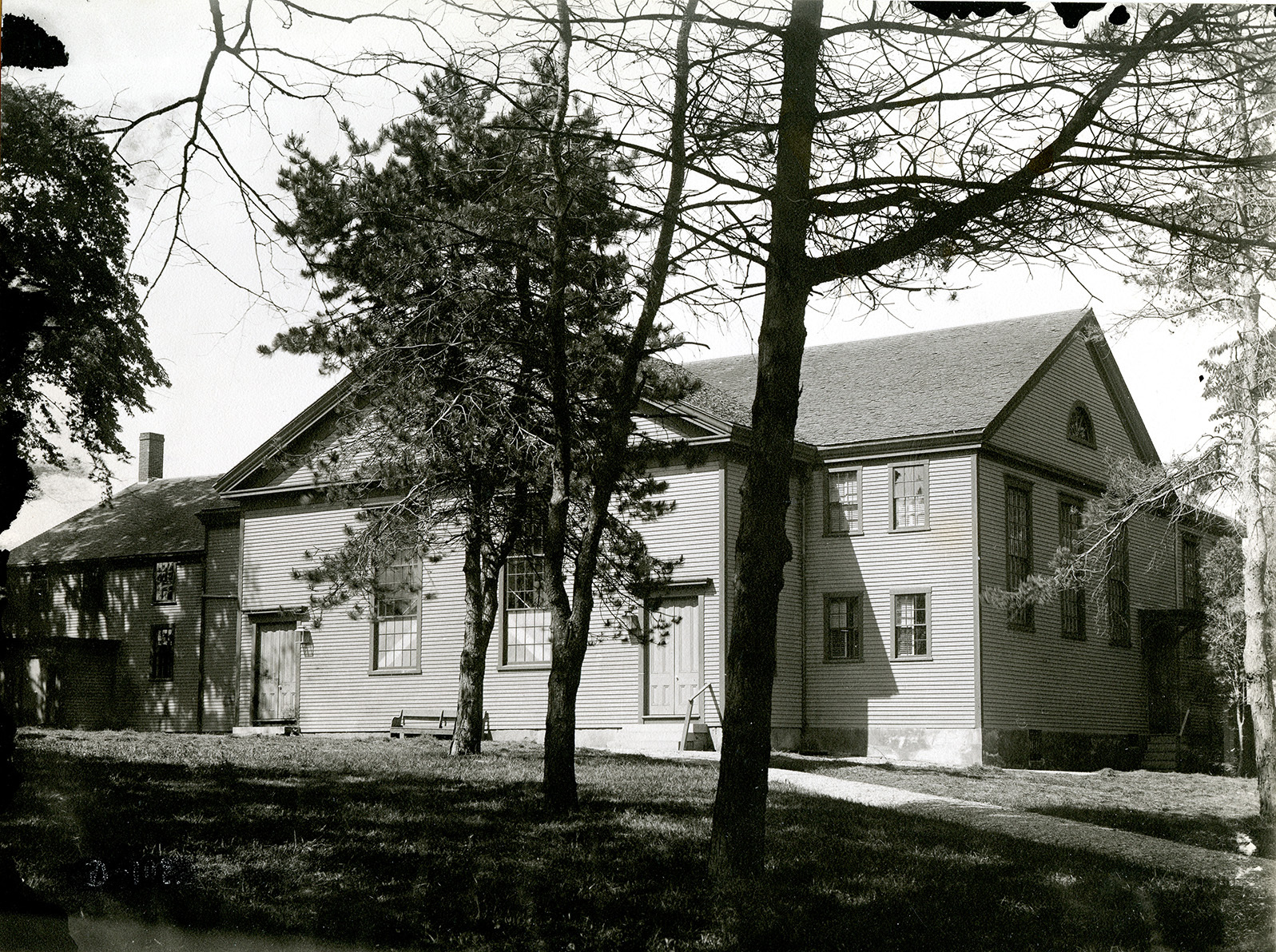
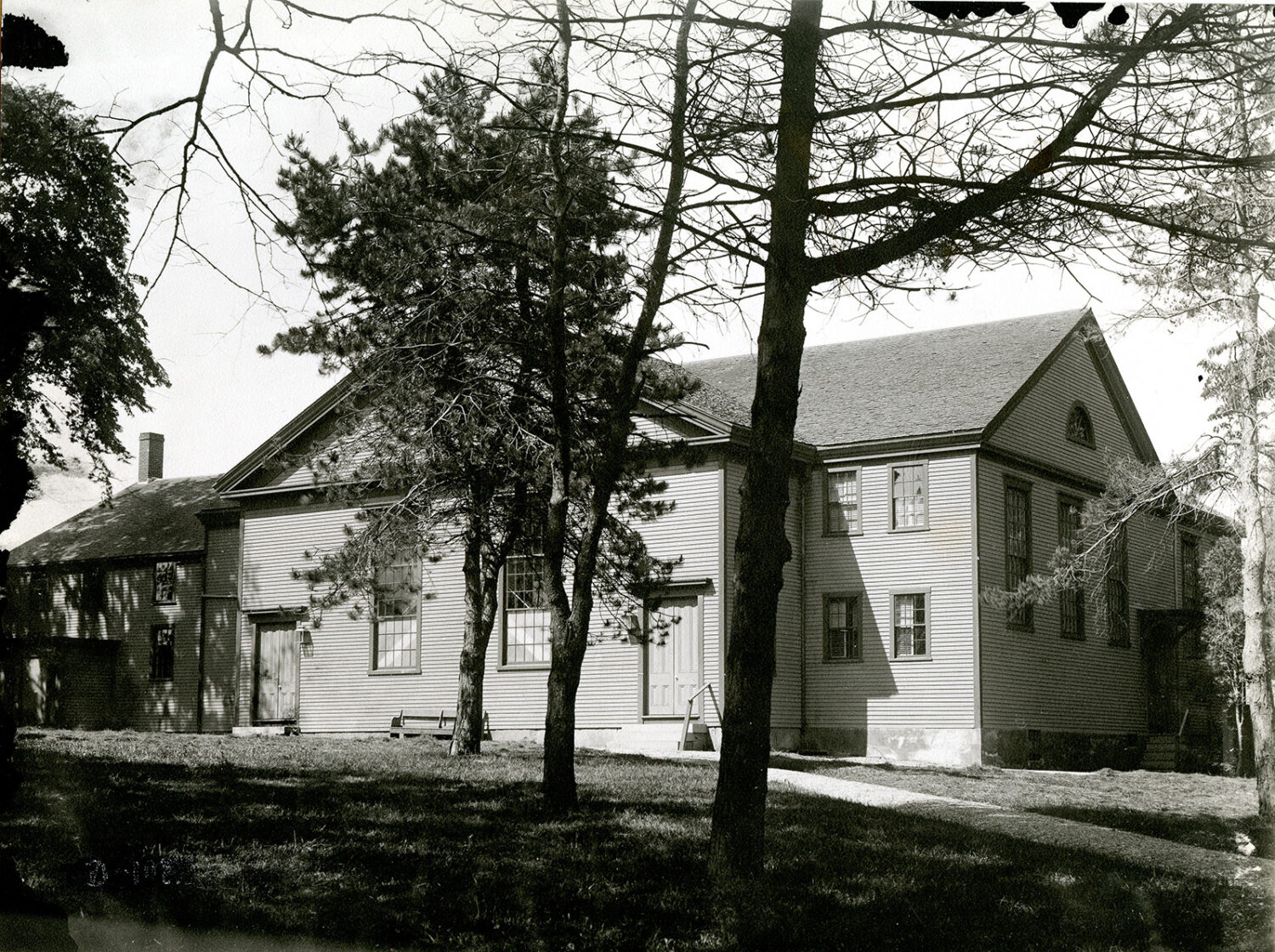
The Great Friends Meeting House in Newport . Portsmouth Friends during the Revolutionary War would have used this meeting house (Providence Public Library Digital Collections)
Meeting of 3rd Day, 5th mo., 1776 at Portsmouth: The preparative meeting of Portsmouth informed that Joseph Brownell, Son of Thomas Brownell, hath been acting in a war like matter as assisting in building a fortification and where upon we appoint Job Sherman and David Fish to Labor with Joseph Brownell and endeavor to bring him to a sense of his outgoing and make report at our next meeting. [So Joseph Brownell had violated rules for helping to construct defensive fortifications in anticipation of a British invasion]
At a monthly meeting held at Newport May 28, 1776: Whereas Job Townsend, Jr. had appeared in a Train Band under arms which is manifest Deviation from our Religious Principles and hath been labored with in Love to bring him to his senses of his outgoings but he refusing to be reclaimed. Therefore we disown him to be any longer a member of our Society and order a copy of this minute to be read publickly at our next monthly meeting. Jacob Mott, Jr. clerk.
Monthly meeting held at Portsmouth June 6, 1776: The preparative meeting of Newport inform that Gideon Whitefield had entered himself aboard a vessel of war being which directly contrary to our peaceable principles. We do disown him to be any longer a member of our Society and order a copy of this minute to be publickly read at the close of a First day meeting at Newport between this and our next monthly meeting. Jacob Mott, Jr. Clerk.
At a monthly meeting held at Newport July 30, 1776: The preparative meeting of Portsmouth inform that Gideon Sherman, Son of John Sherman, and Seth Thomas, son of Joseph Thomas, have enlisted as Soldiers which is a transgression of our Rules of our Society. Therefor we do disown them to be any longer under our care as members thereof and order a copy of this minute to be read publickly at the close of a first day meeting at Portsmouth. Jacob Mott, Jr. Clerk.
At a monthly meeting held at Portsmouth Oct. 29, 1776: The preparative meeting held at Newport inform that John Coggeshall, Son of Elisha Coggeshall, had enlisted aboard a vessel of war and gone out on a cruise which is contrary to the peaceable principles we possess. We do therefore disown him to be any longer under our care as a member of our Society and order a copy of this minute to be read publickly at the close of a First day meeting at Newport between this and our next monthly meeting. Jacob Mott, Jr. Clerk.
At a monthly meeting held at Portsmouth Oct. 29, 1776: One of the visitation of Newport inform that Benjamin Stanton hath been on a cruise in a private vessel of war which being contrary to our peaceable principles as we possess. We do disown him to be any longer under our care as a member of our Society and order a copy of this minute to be read publickly at the close of a First day meeting at Newport between this and our next meeting. Jacob Mott, Jr. Clerk.
At a monthly meeting held at Newport by adjournment, the 2d Day of the first Mo., 1777: This meeting informed that John G. Wanton and Robert Taylor of Newport have signed a Declaration called a “Test Act” which [is] contrary to the peaceable principles we possess. Therefore for the cleansing of Truth and Christian Testimony, we disown them to be under our care as members of our Religious Society and order a copy of this minute to be Read publickly at the close of a first day meeting at Newport. Jacob Mott, Jr. [After the British army and navy invaded and occupied Newport on December 8, 1776, a petition was drafted thanking the British military and King George III and expressing gratitude that Newport had been freed from Patriot rule. More than 400 Newport men signed the petition. While the text of the petition has survived, the identities of its signers has not (or it may be tucked away in a British archive). This record indicates that John G. Wanton and Robert Taylor of Newport signed the petition. It appears that signing the petition violated Quaker rules, which resulted in their expulsions. After the war, John G. Wanton moved to Providence and opened a small merchant shop.]
At a monthly meeting held at Newport by adjournment the 29 Day, 1st mo., 1777: Whereas Joseph Dennis, son of John Dennis, hath enlisted as a soldier, and John Sherman, Jr. hath been on a cruise in a vessel of war, which being directly contrary to the peaceable principles we possess. We do for the cleansing of our Christians Testimony Disown them to be members of our Religious Society and order a copy of this minute to read publickly at the close of a First day meeting at Portsmouth. Jacob Mott, Jr. Clerk
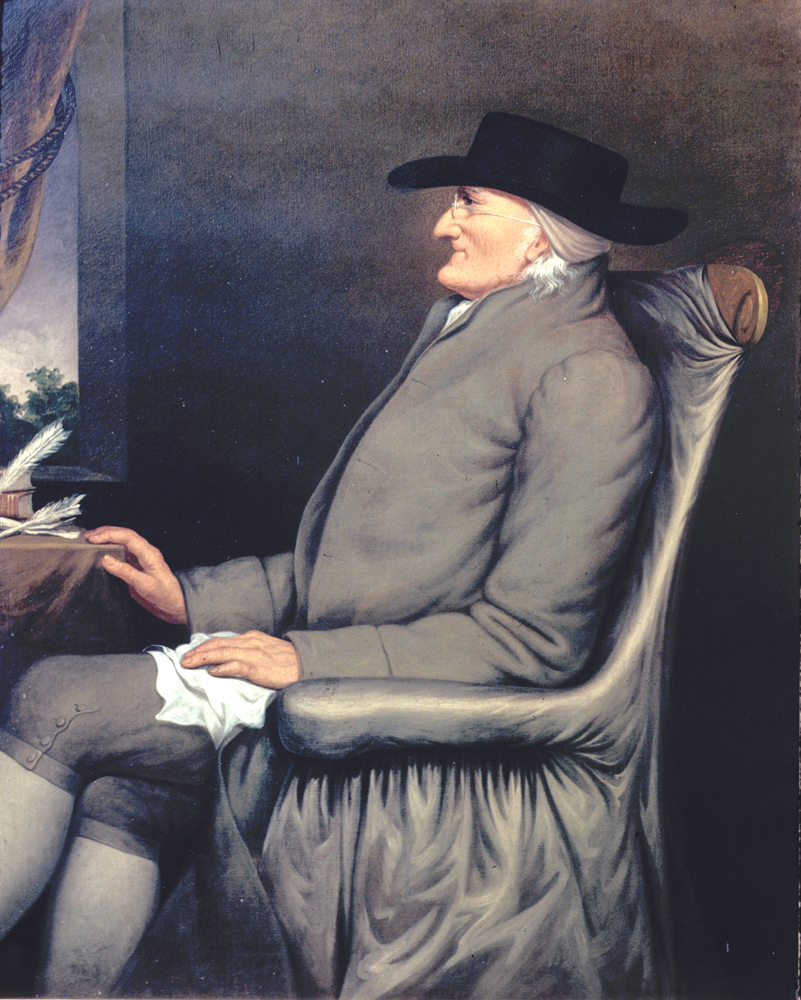
Moses Brown became a Quaker in 1773 and manumitted seven adults and children he had enslaved. He then became an abolitionist leader in Rhode Island (Brown University Portrait Collection).
At a monthly meeting held at Portsmouth Dec. 30, 1777: The preparative meeting of Newport inform that Tiddleman Hazard hath enlisted as a soldier which being directly contrary to the peaceable principles we possess. Wherefore for the clearing of our Christian Testimony, we do disown him to be any longer a member of our Society and order a copy of this minute to be read publickly at the close of a First day meeting at Newport and Gold Marsh is desired to hear the charge and therefore and report at our next monthly meeting. Jacob Mott, Jr. Clerk.
31st day, 3rd mo., 1778: Whereas Philip Tillinghast hath contrary to the Peaceable principles we possess been on a cruise in a private vessel of war and endeavors to justify his conduct therein. We therefore disown him to be of our Society until by a Life and convesation he manifesteth a Disposition more agreeable to the Doctrine of the Gospel of Peace. Jacob Mott, Jr. Clerk.
At a monthly Meeting held at Portsmouth the 27 day, 2 mo., 1781: This meeting having had information from the monthly meeting at Nantucket that Robert Dennis had entered on board a private vessel of war and that they have proceeded to disown him to longest a member of our Society till he make suitable satisfaction with which this meeting concurs and order that a copy of this minute be read at the close of a First Day meeting at Newport between this and our next Monthly meeting and the clerk is desired to take care it be done accordingly. Clarke Rodman, Clerk.
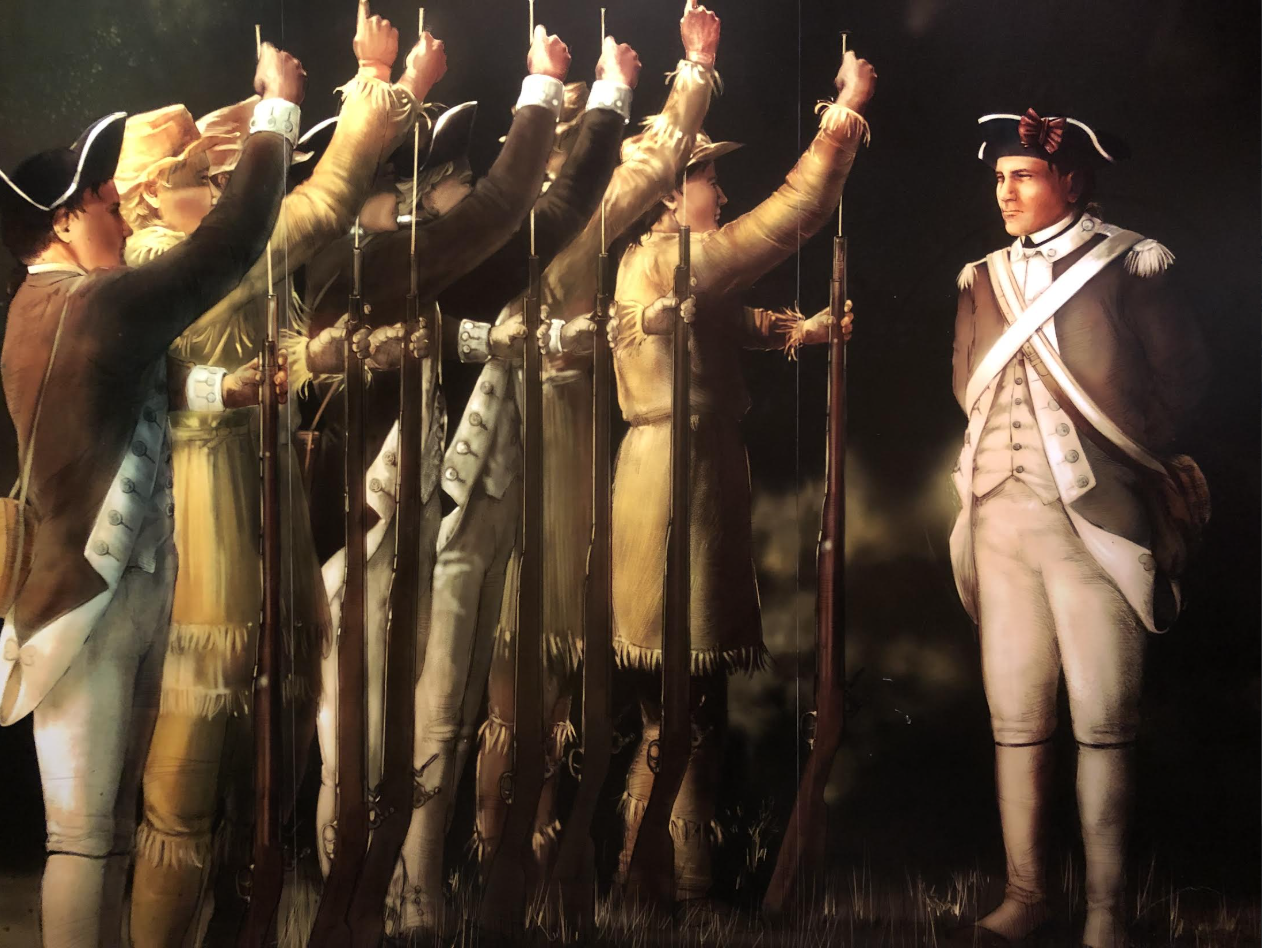
Soldiers training during the American Revolutionary War at Valley Forge (Smithsonian Institute)
Monthly meeting 24th Day, 9th mo., 1784: The preparative meeting of Newport informed this meeting that they have had authentic information from New York that Daniel Goddard, son of John Goddard, hath entered on board a private vessel of war and was gone on a cruise which being inconsistent with our peaceable principles we disown him to be any longer a member of our Society till his conduct shall be more consistent with Religious profession. Clarke Rodman, Clerk.
Notes:
See Quaker Testimonies, 1718-1827, and manumissions of people enslaved by Quakers, Newport Historical Society. The Portsmouth Friends’ testimonies are on pages 53-60, 67, and 72. The testimonies above were transcribed by a Mrs. Oliver Cushman many years ago and deposited with the Pennsylvania State Historical Society in Philadelphia.
For more on John G. Wanton, see Timothy M. Phelps, “Historians Confused by Three Joseph Wantons in Colonial Newport,” The Review of Rhode Island History, May 30, 1775, https://smallstatebighistory.com/historians-confused-by-three-joseph-wantons-in-colonial-newport/.
For more on privateering, see Christian McBurney, An American Privateer’s War on Britain’s African Slave Trade (Westholme, 2022).
The Author

You Might Also Like