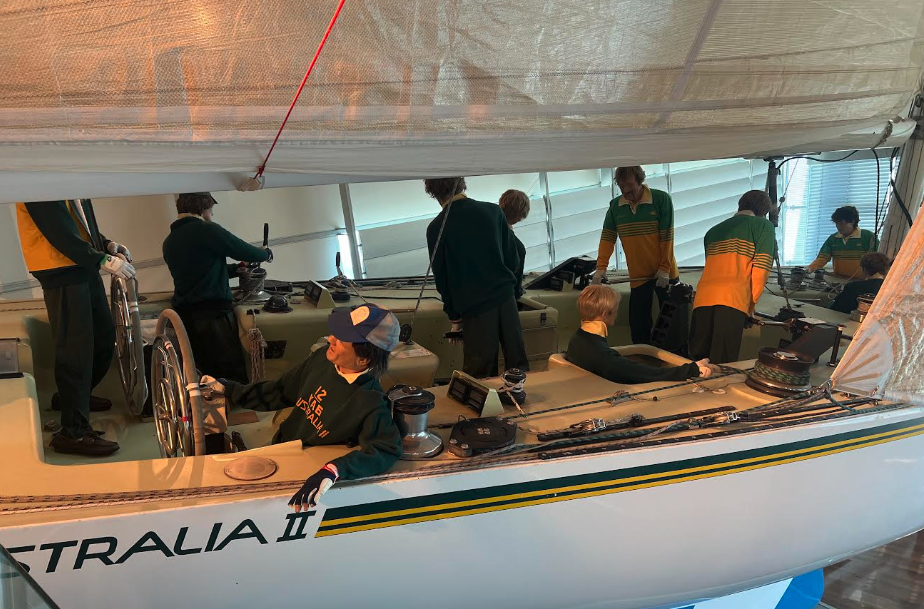


A few years ago, my wife, Margaret, and I were visiting the wonderful WA Maritime Museum in Fremantle, Australia (“WA” stands for Western Australia). Suddenly, I was standing before the actual Australia II yacht, the surprise victor at the America’s Cup in Newport in 1983. There were also several exhibits, including videos. In a video clip, an Australia II team member admitted, “We certainly wouldn’t have won the America’s Cup without the winged keel.” More on the winged keel later. Clearly, the Aussies are justifiably still proud of that remarkable victory, which demonstrated to the world their maritime skills, perseverance, and creativity. But I also knew that the win was a bitter pill for Newport, Rhode Island. Thereafter, the America’s Cup races would never return to Newport.
Short History of America’s Cup
The America’s Cup started out as a perpetual trophy offered by Queen Victoria for her silver jubilee in 1851. But an upstart American schooner, America, won the race around the Isle of Wight in the English Channel. Design advances had aided the Americans: a new hull design and less sail aloft gave the Americans the edge. The spoils of victory: £100 and a silver cup. The silver cup was mounted in the New York Yacht Club’s Manhattan granite-and-marble mansion in 1901. It remained with the NYCC for 132 years. The America’s Cup would become the world’s oldest sporting trophy.
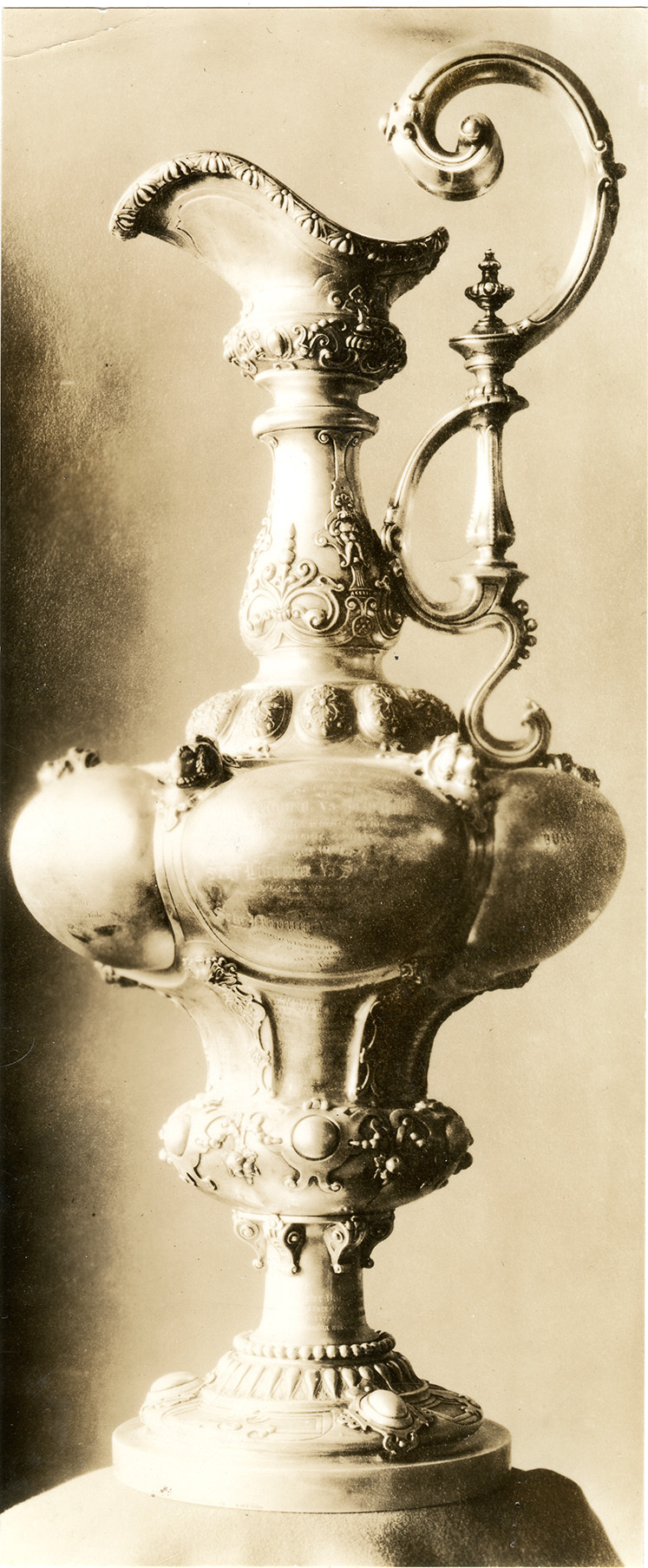
The America’s Cup was held by the New York Yacht Club at its headquarters in New York City for 132 years (Providence Public Library Digital Collections)
There were 25 challenges to win the cup from the United States prior to and including the America’s Cup races in 1983. The first thirteen defenses were held from 1870 to 1920, off the coasts of New York and New Jersey. Many of the American defenders were designed and built by the Herreshoff Manufacturing Company in Bristol, Rhode Island, including the Vigilant (1893) and the Enterprise (1930).
Finally, the New York Yacht Club came to its senses and moved the cup defense to Newport. After all, New York’s elite had been summering and sailing at Newport for decades. Newport has a wonderfully protected bay, Narragansett Bay; outside of it, on Rhode Island Sound, where the races were held, the winds are virtually constant. After the races, the contestants could relax in beautiful Newport. From 1930 to 1983, Newport hosted twelve defenses.
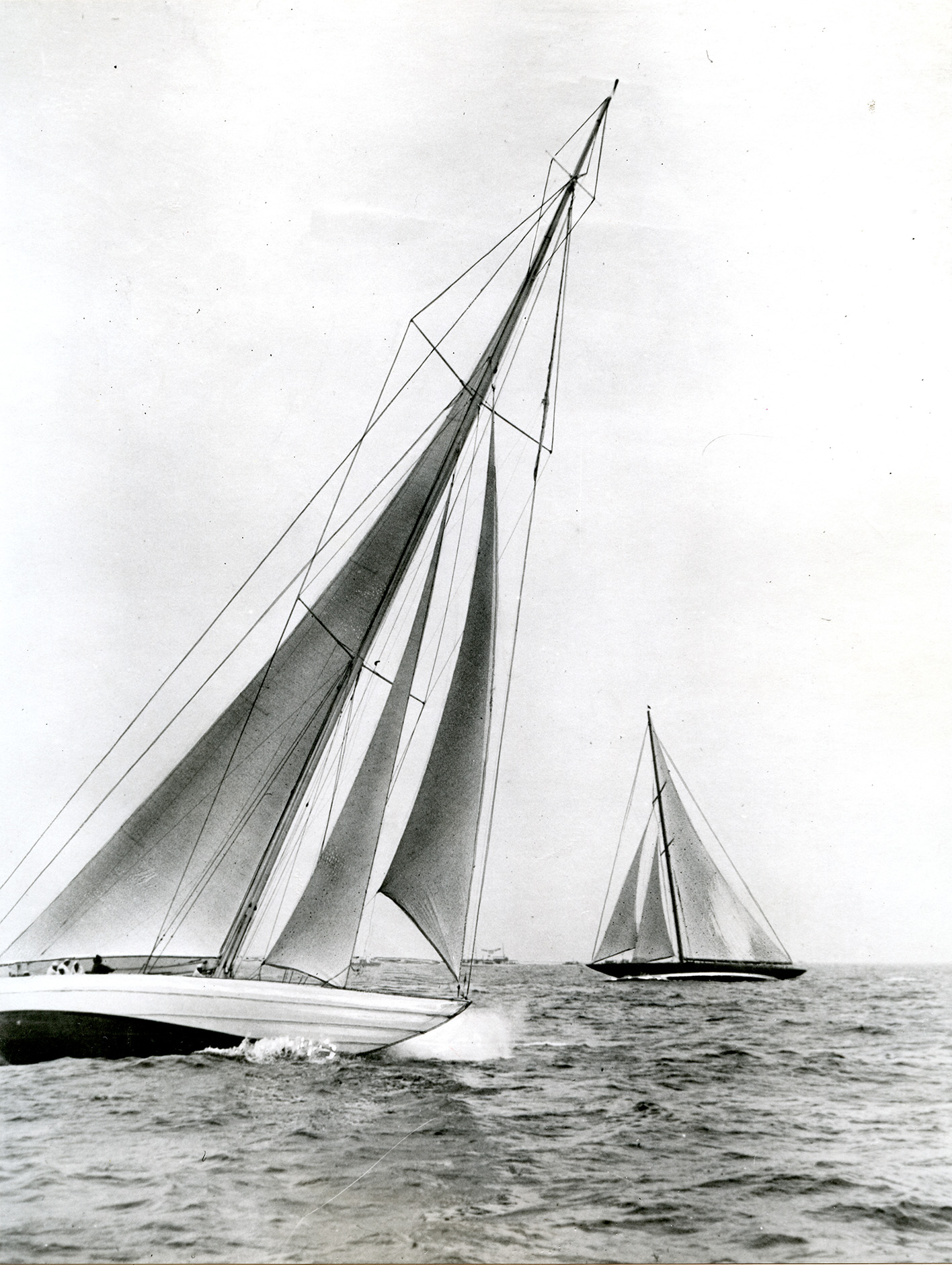
The defender Enterprise (United States / New York Yacht Club) and the challenger Shamrock V (United Kingdom) battle for position in Rhode Island Sound during the final America’s Cup race in 1930. It was the fourteenth America’s Cup race and the first held at Newport; the move was reportedly due to the tall masts of the new yachts. Enterprise won the series 4–0 (Providence Public Library Digital Collections).
The Australians Arrive as a Challenger
The first four challengers from a foreign country were from the Royal Yacht Club in the United Kingdom. Then the Aussies appeared: the Sydney Yacht Club was the foreign challenger in 1962, 1967, 1974, and 1977. In 1962, Australia’s Gretel became the first challenger to win an America’s Cup match race since 1930. In 1974, Alan Bond’s yacht, Southern Cross, lost to Courageous, 4-0. In 1977, Courageous, financed and captained by Brown University dropout and founder of CNN, Ted Turner, defeated Bond’s Australia, also by 4-0. Bex Lexcen designed or co-designed all of Bond’s yachts. I recall listening on the radio to many of these races. Each time the Americans retained the cup, it made winning the cup even more coveted.
The Royal Yacht Club of Perth, located in Western Australia, arrived as the foreign challenger in 1980, with John Bertrand as the captain of the rebuilt Australia. Alan Bond was again the boat’s main investor and Ben Lexcen the designer. Perth has its own protected harbor; and its waters on the Indian Ocean have strong winds that require top sailing techniques. Still, the United States yacht Freedom, with Dennis Connor as its captain, won easily, 4 matches to 1. Connor had spent some 4,000 hours training his crew, raising the level of professionalism among yachtsmen. But Bond promised his crew that 1980 was only a test run. He hinted that he was ready to open up his wallet to spend more and that the Aussies would be ready to challenge in 1983.
Owner Alan Bond and captain John Bertrand continued with the services of the unheralded but brilliant boat designer, Ben Lexcen. Working at world class design facilities in the Netherlands, Lexcen produced a design for the “winged keel” that achieved ballast as low as possible and yet maintained stability in a boat. The winged keel was attached to the Australian challenger, the Australia II. The yacht was built by Steven Ward in Cottesloe, Perth, in Western Australia.
This novel design in the sailing boat’s keel provided the Australian sailing boat with key advantages. The winged keel allowed the boat to accelerate faster and gave the boat a bit more speed than its rivals. But just as importantly, it increased the boat’s maneuverability. This allowed the Australian II to excel in tactics. For example, at the all-important start of the race, Australia II could maneuver to the inside of its competing boat and drive the competing boat to where Bertrand wanted it to go—even if it meant crossing the starting line before the correct time.
The Australian team also hired a nuclear physicist from New Zealand to design the twelve-meter’s sails. Even with these advantages, Captain John Bertand worked his Australian crew hard in preparing for the 1983 trials.
The 1983 America’s Cup Races Begin
The American defender in 1983 was the yacht Liberty, sponsored by the New York Yacht Club and owned by the Freedom syndicate. The boat’s designer was Johan Valentjin and it was constructed at a Newport shipyard by Newport Offshore, Ltd. The Liberty’s captain was Dennis Connor and he was supported by an experienced crew.
All of the races were held 7.9 miles southeast of Brenton Reef Light in Rhode Island Sound. The U.S. Coast Guard employed 36 vessels in handling the recreational craft and keeping them away from the diamond-shaped sailing course.
In the elimination trials among the non-U.S. challengers, Australia II vanquished all comers. Its winged keel was proving its value.
Throughout the challenges among the foreign racing yachts, and during the finals against Liberty, the Australian team kept the winged keel hidden from the public. Scuba divers made several attempts to photograph the winged keel underwater. On July 23, during elimination trials, a Canadian boatman with a camera was arrested while scuba diving near Australia II. He was charged with trespassing and his camera was confiscated, but the Australians later dropped the charges.
During the finals with Liberty, on Saturday, September 24, another incident occurred, even though four guards were on board Australia II. At 1:50 a.m., the guards heard tell-tale blips and then saw bubbles about thirty yards away where the scuba diver must have broken the surface of the water. Several people reported seeing a man wearing a black wetsuit with a yellow tank on his back, but no arrests were made.
The New York Yacht Club resorted to legal challenges under America’s Cup rules. Fortunately, the New York Yacht Club did not disqualify the Australian yacht or resort to the courts. The Australia II was ruled a legal 12-meter yacht under applicable rules. In fact, the New York Yacht Club earlier in the year was permitted to view the winged keel at a shed at Cove Haven Marina in Newport, but no one from the club showed up, a major miscalculation. The dispute over the winged keel increased the public’s interest in the races.
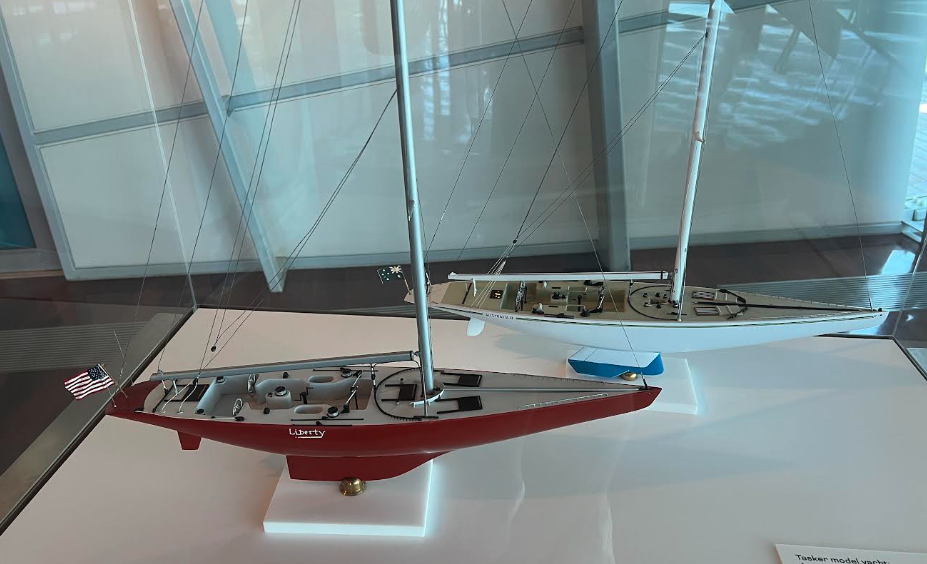
Tasker moder of the American yacht Liberty, sailing for the New York Yacht Club and owned by the Freedom Syndicate. Its designer was Johan Valentjin and it was built in Newport by Newport Offshore, Ltd. The Tasker model of Australia II is in the background (Christan McBurney at the WA Maritime Museum, Perth, Australia)
On September 13, the races were scheduled to begin. Australia II sailed out of its base at Newport Offshore shipyard to loudspeakers blaring Men at Work’s “Down Under” and with a huge green flag showing a yellow kangaroo with red boxing gloves flying at its mast. Liberty emerged from Williams & Manchester Yard with the song “Chariots of Fire” blasting. But no sailing would be done this day—the winds did not cooperate.
In the best of seven races, Australia II found itself behind, 3 matches to 1. One more victory for the ever confident Dennis Connor and the crew of the Liberty and the Americans would again achieve a successful defense of the America’s Cup. Then the Aussies won the next two matches. In match five, Liberty was ahead, but lost after experiencing an equipment failure. In the sixth race, Australia II won by the biggest winning margin of the matches. The contest was tied, 3-3. The winner of the next race would win the coveted America’s Cup.
The final race was scheduled for September 24, with some 2,000 boats turning out in Narragansett Bay to watch the contest. One can imagine the efforts Rhode Islanders made to obtain a space on one of these boats. The Liberty was made 924 pounds lighter for the seventh race. But to the disappointment of many, the race was cancelled due to poor weather conditions.
The Deciding Race: Australians Celebrate
The race was rescheduled for September 26. More than 1,500 boats lined the racecourse on Rhode Island Sound to witness the “race of the century.”
Liberty burst out to a quick lead and increased it at every mark. After the fourth of sixth legs on the 24.3-mile course, with Connor reading the wind correctly, the Liberty had a seemingly safe 57-second lead. On the fifth leg, disaster struck the Americans. Australia II’s speed was showing and it was catching up a bit. Perhaps feeling the pressure, Connor turned his boat to the left side of the course, believing that the wind would arise there. He turned out to be wrong and he lost valuable time. Meanwhile, Australia II set its spinnaker and found the wind on the right side of the course. It grabbed the lead by 21 seconds. This change in the lead had nothing to do with Australia II’s winged keel, Lexcen later observed. Once in the lead, Liberty tried desperately to regain the lead on the final leg, tacking 45 times. But Bertrand, using Australia II’s superior maneuverability, made the same tacks to cover Liberty’s wind. Connor could not pass. At 5:21 p.m., Australia II crossed the finish line, 41 seconds ahead of its rival.
It was the first time in 132 years that a country other than the United States had won. The crew of the Australia II, and hundreds, perhaps thousands, of rowdy Aussies who had made the trip to Newport, celebrated like Newport has never seen before or since. John Bertrand, normally reserved, raised a can of beer in a victory salute and took a long guzzle. Many of the Australian newspaper reporters and radio announcers shed tears of joy. At the Australia II’s dock in Newport, Alan Bond finally had his yacht raised out of the water with a crane, showing off the now-famous winged keel.
A Thames Street bar owner brought cases of champagne to Newport’s wharves and kept popping corks as long as the thirst of the Aussies was not quenched. “They’re great people,” he said of the Aussies. “They came to my place every night. People loved them. I would say 60 percent of all Americans wanted the Aussies to win.”
At the news conference, Dennis Connor was emotional, but graceful in defeat. “Today, Australia II was the better boat. We had no excuses.” Connor took no questions.
Back in Australia, the final race started at 2 a.m., but many people in the country woke up or remained up to watch it on television. Australia’s prime minister, Bob Hawke, celebrated at the Royal Perth Yacht Club. “This is a great moment for Australia,” said Hawke, as he downed champagne. He declared September 27 to be a national holiday. He famously said, “Any boss who sacks anyone for not turning up today is a bum.” The win captured the imagination of the country, even though yachting was a little-known sport. Clearly, the victory was important for Australia, reflecting its arrival of the international sporting scene.
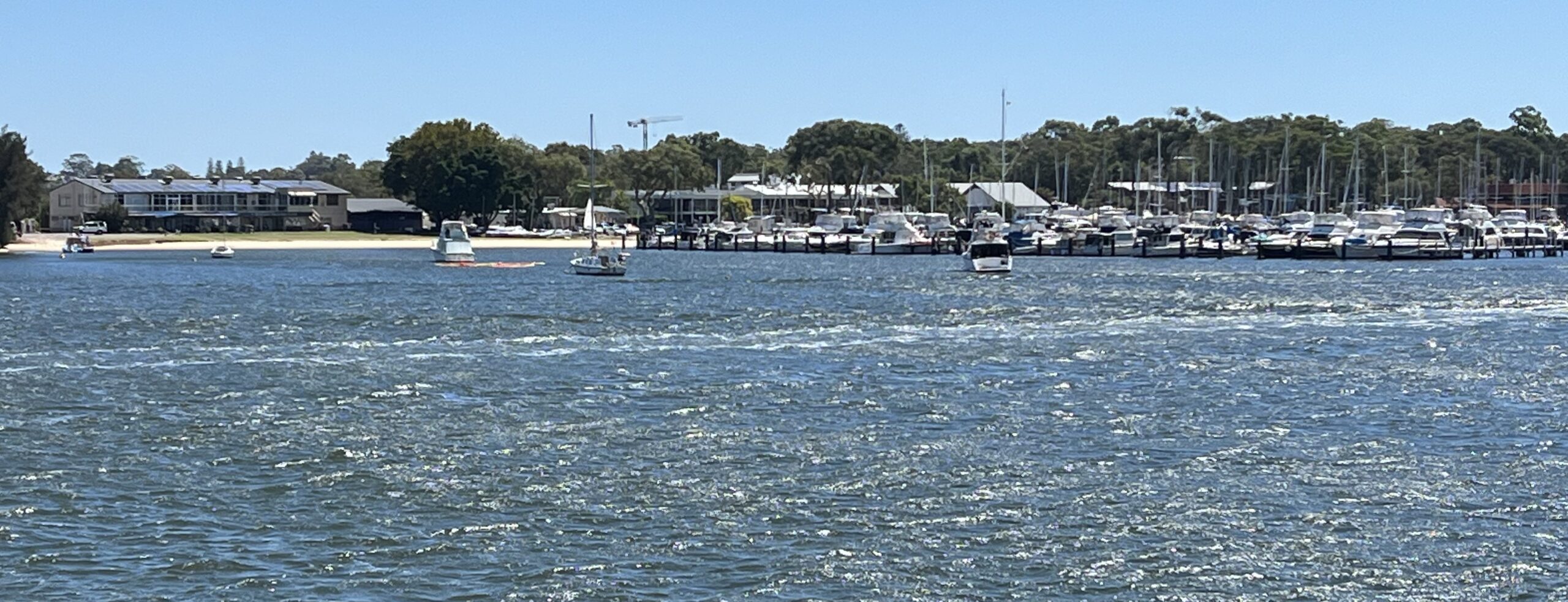
The Royal Perth Yacht Club at Perth, Australia, 2024. It did not have the prestige of the New York Yacht Club but it got the job done (Christian McBurney)
Two days after the race, on the grounds of Marble House, the Newport mansion, a representative of the New York Yacht Club handed over the America’s Cup to a representative of the Royal Perth Yacht Club. After all the bitterness between the two clubs, the New York Yacht Club surrendered the cup with grace and humor.
At a White House Rose Garden reception later in the day, President Ronald Reagan and Vice President George Bush, Sr. congratulated the Australian team. “If we had to get beat, we’re glad it was by the Aussies,” President Reagan said. Still, he joked, “Don’t bolt that Cup down too tightly.” At least the Australians agreed to continue to call the race and cup America’s Cup.
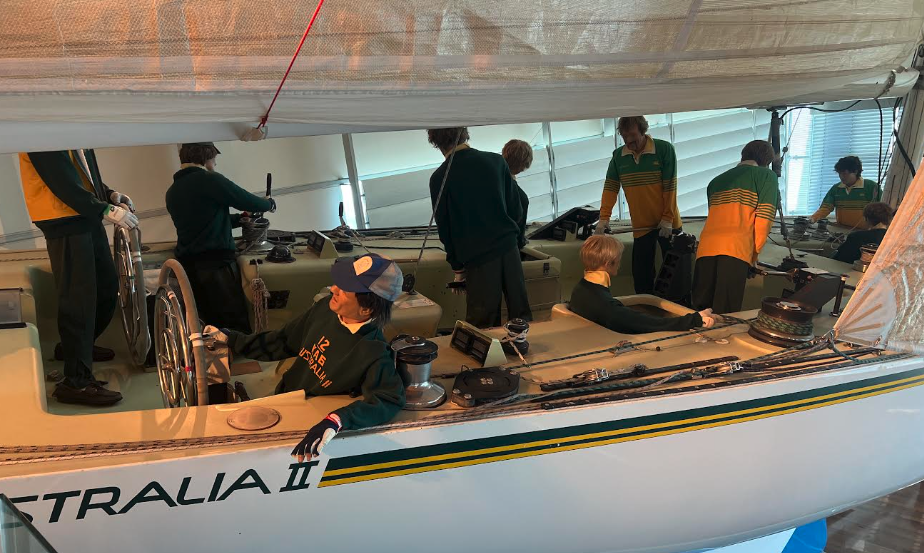
The actual Australia II yacht, displayed at the WA Maritime Museum in Perth, Australia, and mannequins of its eleven-man crew. Standing on the far left is the bottom half of the captain, John Bertrand. On the left-hand side of Bertrand is the navigator, Grant Simmer. On the right-hand side of Bertrand is the tactician, Hugh Treharne (Christian McBurney)
Sad Days for Newport and the New York Yacht Club
In 1987, the Royal Perth Yacht Club hosted its defense at Fremantle, in Western Australia. Dennis Connor had moved to the San Diego Yacht Club. To his credit, he and his team won the series, 4-0.
But the America’s Cup racing series would not return to Newport. It never would. Newport was deemed too small to host. It was a victim of the wild success of the 1983 races.
The New York Yacht Club was the only yacht club to hold the America’s Cup from its inception in 1851 to 1980. It has not won another America’s Cup since 1980 in Newport. After the 1983 loss, the cup was now open to challenges from any American yacht club. San Diego hosted the next three races. Other countries won and hosted the cup too.
Now America’s Cup is a very different kind of race. Ultra-billionaires invest in super yachts, which are hardly recognizable as yachts. New Zealand, Switzerland, and Italy began to win the cup. The good old days of yachting are gone, in my opinion.
The following is a charming recollection from Brooks Betz, a New Jersey historian. He writes about his experiences in the New York Yacht Club building when he was a young man.
For 82 years, the America’s Cup sat inside the New York Yacht Club on West 44th Street in New York City. You reached the trophy by climbing a magnificent, red-carpeted marble staircase reminiscent of Rosecliff Mansion in Newport. At the top was a soaring, two-story, glass, octagonal Trophy Room, and in the center stood the America’s Cup, actually bolted to the floor. Club lore joked that if the Cup were ever lost to a sailing opponent, the defending captain’s head would replace it. Nobody really expected to find out.
Then, on September 26, 1983, the unthinkable happened. Australia II defeated Dennis Conner’s Liberty, ending the New York Yacht Club’s 132-year hold on the America’s Cup. The cup was unbolted from the floor and delivered to the Australians.
That December, I returned to the club with my dad. Naturally, I wanted to go upstairs and see the Trophy Room again. We started up that familiar grand staircase, but something was different. The carpet was new. I didn’t think much about it.
Then I reached the top of the stairs and looked into the Trophy Room. It was empty. For the first time, there was no America’s Cup. No magnificent silver trophy commanding the center of the room. Just an empty space. I asked my dad, “Why did they replace the carpet?” He looked at me and said, “Who wants to see worn-out carpet surrounding an empty spot—and a huge hole in the floor where the Cup had been bolted down?” And suddenly I understood. They hadn’t simply removed a trophy. They had replaced the carpet that showed exactly where it had stood.
I remember standing there with my dad, staring into that empty room, at the spot where the most prestigious trophy in the world once stood. More than forty years later, I’ve never forgotten that empty room.
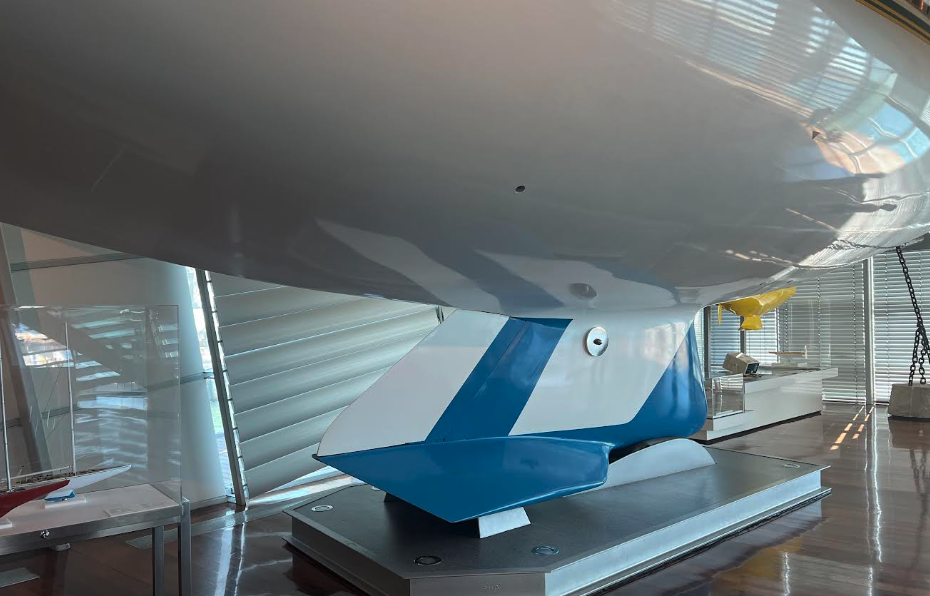
Australia II’s famous “winged keel” at the WA Maritime Museum in Perth, Australia (Christian McBurney)
Sources
“America’s Cup Win, 1983: Australia II Wins the America’s Cup,” National Museum Australia report, at https://www.nma.gov.au/defining-moments/resources/americas-cup-win
“The Cup That Changed Everything,” America’s Cup official website, at https://www.americascup.com/history/65_THE-CUP-THAT-CHANGED-EVERYTHING
“It’s Australia II,” “No Hard Feelings at NYYC,” and “Aussies Rewarded,” The Telegram (Bridgeport, CT), Sept. 27, p. 1 and Sports section, p. 17.
“America’s Cup Now Australia’s,” “New America’s Cup Era Begins,” “Down Under Stays Up to Watch Cup Victory,” “New York Yacht Club Yields Cup with Grace,” and “Australia II’s Victory Pleases Americans,” The Blade (Toledo, OH), Sept. 27, 1983, pages 1 and 20. All Associated Press reports.
“Australia II Wins and an Era is Over,” and “Veteran Says Connor Erred in 2 Ways,” Los Angeles Times, Sept. 27, 1983, Part III, pages 1 and 7.
Joanne Fishman (N. Y. times News Service), “America’s Cup: There was no Wind and No Racing, but there was Controversy,” Corpus Christi Caller-Times, Sept. 23, 1983, D4 (source for scuba diving stories).
“Reagan Gives Aussies Best On Sailing Victory,” Baltimore Sun, D9.
“Reagan Says Well Done as US Gives Up Treasure,” The Age (Melbourne, Australia), Sept. 29, 1983, page 1.
Richard V. Simpson, The Quest for the America’s Cup, Sailing to Victory (Charleston, SC: History Press, 2012).
Brook Betz email to Christian McBurney, Sept. 19, 2026.
There is an excellent 2022 documentary with a focus on John Bertrand and Australia II, called Untold: The Race of the Century. The documentary, directed by Chapman Way and Maclain Way, is available on Netflix.
The Author

You Might Also Like