

From December 1774 to March 1776, Captain James Wallace of the British Navy patrolled Narragansett Bay. He had two objectives: first, to minimize smuggling that evaded imperial custom duties; and second, to procure supplies for the sailors on his ships and the British army troops controlling Boston. In both goals, he largely succeeded—yet his intimidating presence failed to prevent most Rhode Islanders from favoring independence from Britain. Many people still hoped for compromise in late 1774, and Wallace hoped to make Newport a “post for the King.” But by early 1776, the majority seems to have resolved on the break, and his squadron left Newport without a sendoff. How did this happen?
Terrorizing the People
James Wallace (1731-1803) was a career officer in the British Navy (called the Royal Navy). The great-great nephew of a baron, he served in the Caribbean and Mediterranean seas during the French & Indian War (which the British called the Seven Years’ War). After the war he moved to the North American station, and in 1771 became captain of HMS Rose, a relatively small warship with twenty cannons.
By late 1774, the British troops stationed in Boston were effectively under siege. While British soldiers shut down the port, the people outside the city prevented supplies from entering the town. Short on food, British general Thomas Gage called for help. He sent the Rose, captained by Wallace, to Narragansett Bay. A notorious haven for smugglers, the Bay had seen little military action since Rhode Islanders had burnt the British customs ship Gaspee in June 1772.
Wallace resolved to accomplish both the goals of reducing smuggling and obtaining supplies. He made illicit trade far more difficult by seizing several colonial merchant ships to enforce the empire’s regime. He also procured a great many supplies, some through purchases, but others through threats and intimidation. In October 1775, after rebels removed 1,000 sheep and 50 cattle from Newport, Wallace threatened to bombard the town. Since it was still a valuable British port, he did not do so; but his threats later paid dividends, forcing port officials to sell food to him. When Bristol initially failed to supply him with provisions, he bombarded the small port for an hour, causing some damage to buildings, but with no injuries except that of the Congregational minister who had a heart attack and died. On December 10, 1775, at 3 a.m. in the morning, Wallace landed a force on Jamestown seeking to seize livestock and perhaps leave promissory notes behind in exchange. Instead, Patriot militia from behind stone walls ambushed the raiders, killing a Royal Navy boatswain. In retaliation, Wallace’s men burned at least thirteen buildings, plundered others, and killed at least one townsmen. On January 12 and 13, 1776, Wallace’s men landed on Prudence Island, where a small farming community thrived. Rhode Island militiamen were ready for them in numbers and pitched battles resulted. Wallace’s men were forced back to their ships, but they returned later to burn most of the houses and farm buildings on the island.[1]
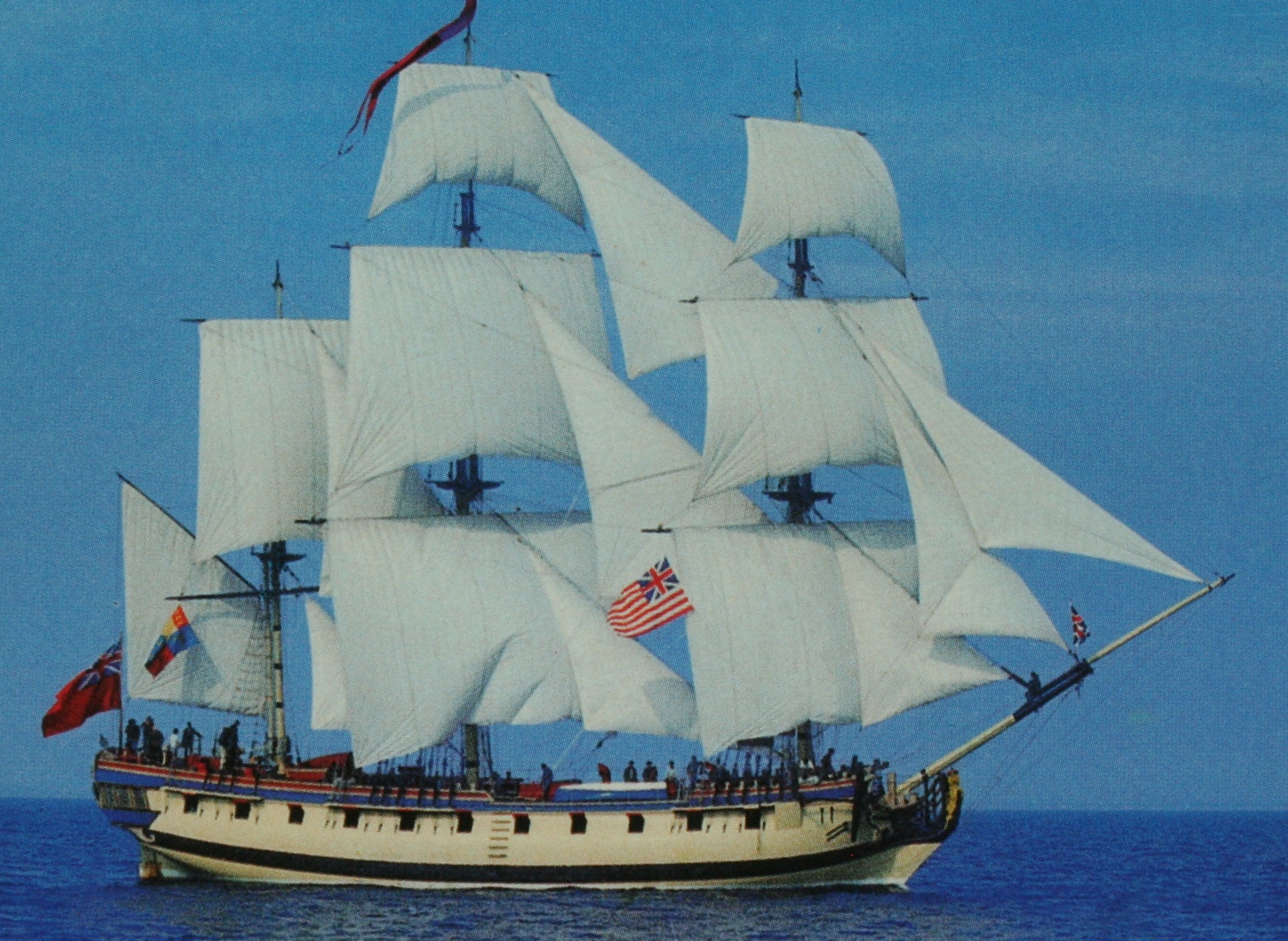
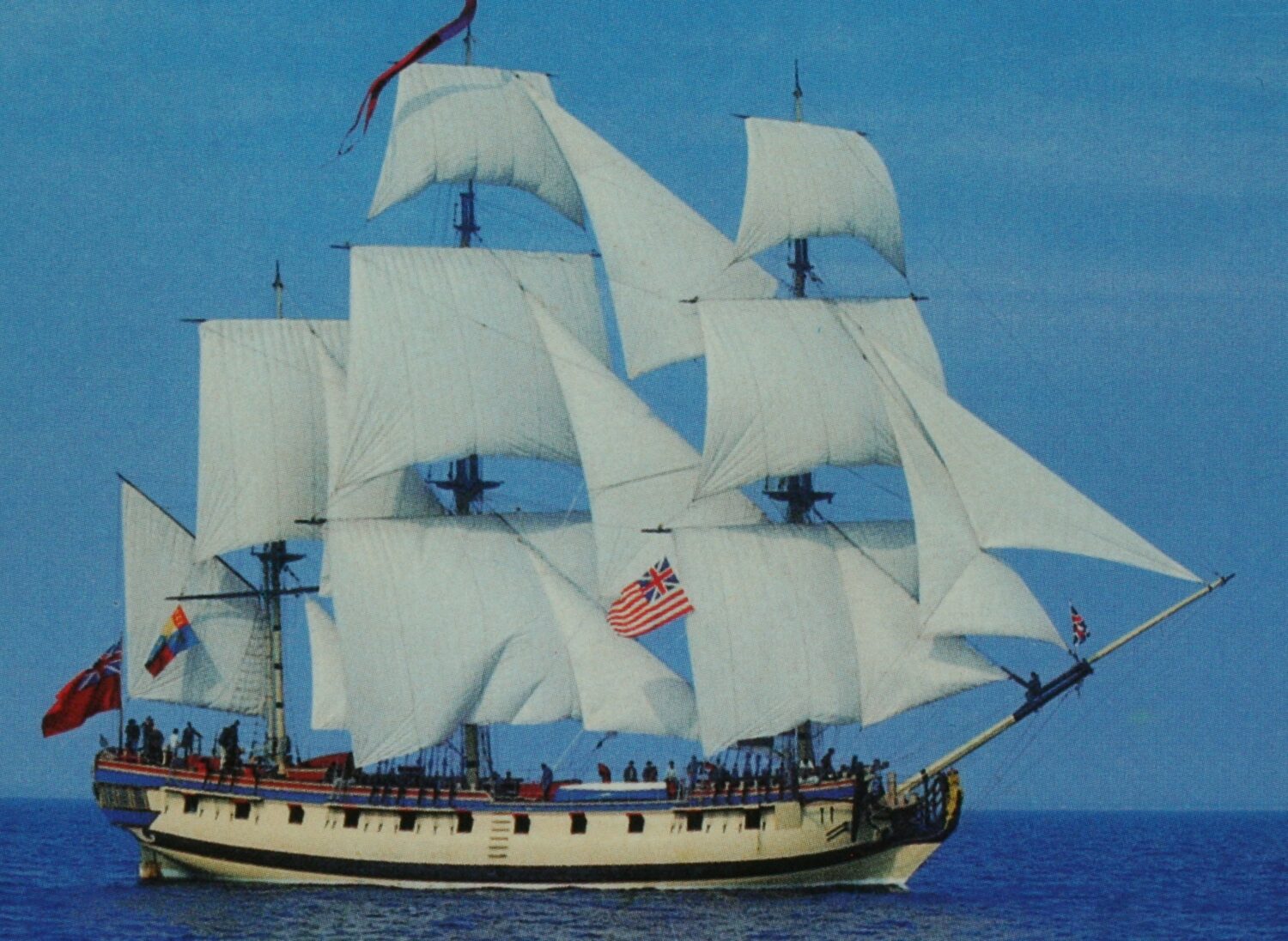
Photograph of the replica of the HMS Rose frigate, circa 1975, that was built under the auspices of John Millar, formerly of Newport. This photograph was from a postcard, of which John Millar holds the rights (John Millar)
Wallace used a judicious amount of intimidation, but for the most part did not carry out his threats. His menace did bring a depopulation of much of Aquidneck Island, then the most populous part of the future state. Many people in Bristol, Jamestown and elsewhere on the Bay fled to Providence, other mainland Rhode Island towns, or Massachusetts and stayed there for the rest of the war. He left the Bay only because the British evacuated Boston in March 1776, obviating the need for supplies from the rest of New England.
Throughout this period, Wallace acted as the King’s representative and enforcer, and a friend to His Majesty’s loyal subjects. When a mob threatened to destroy a Newport Tory’s house, he sent his marines to break it up. He also wrote to Governor Joseph Wanton, “I therefore think it is my duty to enquire of you whether it is war or peace, or whether I can have the countenance and protection of you and the laws, as my behavior and character entitle me to.” When a militia assembled in Newport in April 1775 to support the fighting in Massachusetts, he told the town that if they sent it north, he would “lay the town in ashes.” Later he refused to recognize Wanton’s replacement, Nicholas Cooke, whom the General Assembly had appointed when Wanton refused to sign commissions for officers to fight against the British.[2]
When Captain Abraham Whipple, one of the leaders of the attack on the Gaspee three years earlier, captured one of Wallace’s secondary ships, Wallace cited the earlier attack and threatened to hang him. Whipple famously replied, “Always catch a man before you hang him.”[3]
Nevertheless, Wallace’s superiors judged his patrols a success. Admiral Molyneux Shuldham, who commanded the British fleet in Boston in Wallace’s last few months patrolling the Bay, wrote, “As Captain Wallace’s services deserve every reward can be conferred on him, I humbly recommend it to their Lordships’ consideration sending him out on a larger and better ship.”[4]
Wallace did get a better ship, the 50-gun HMS Experiment. He led a fleet of warships and transports into Narragansett Bay on December 7, 1776, when the British began its occupation of Newport, the rest of Aquidneck Island and Jamestown for the next three years. Wallace went on to fight bravely and skillfully until being captured by the French off South Carolina in 1779. He spent the rest of the war as a prisoner, then returned to military duty in the Caribbean in 1782. His wife’s father, who had been the loyal governor of Georgia, received an estate in Jamaica to compensate for losing land in America. A series of promotions followed, including a knighthood, and he became an admiral in the Royal Navy in 1801.[5]
A Political Failure
Why then did Wallace fail to stem the tide of revolutionary sentiment? The fundamental problem was not military. Wallace’s squadron and marines easily overcame colonial resistance, aside from a few losses such as the secondary ship. The start of fighting in Massachusetts in 1775 actually brought relief to Rhode Island’s Tories, who expected the mighty British empire to finally crush the rebellion.
Instead, the problem was political. Rhode Islanders were simply unwilling to stay in an empire that was intent on taxing foreign trade, their lifeblood, to the point where it was unprofitable. Rather than give up and become mere subsistence farmers, they resolved to overthrow imperial restrictions and try to govern and protect themselves.
As described at length elsewhere, Rhode Islanders had the best incentives of all of the colonies to seek independence.[6] Wallace made an initial attempt to connect with Newporters loyal to the crown, and his protection enabled them to form a society to ensure order even as most Patriots abandoned the town. But far from intimidating Rhode Islanders into humble acceptance of imperial rule, he stiffened their resolve to be free of British restriction. While Rhode Island was a secondary participant in the Revolutionary War, its spirit of enterprise and personal autonomy laid the foundation for a thriving country after independence.[7]
Wallace was an effective soldier, but the empire really needed a politician or diplomat, not a warrior who sought to punish “rebels.” Or maybe the empire’s hold on Rhode Island and other New England colonies was doomed by that point. Without a good export crop, shipping and other commercial services became Rhode Island’s main export. That put the colonies in direct competition with Britain itself, the most advanced commercial center of the day. It is therefore much easier to explain why Rhode Island and other New England colonies rebelled, than why Virginia did despite its popular tobacco crop.
Resistance from the Start
Wallace certainly had plenty of evidence of rebellious attitudes in some high-ranking officials and local groups. Soon after he arrived, he discovered that Patriots had taken the cannons from the fort guarding Newport and moved them up to Providence. When he complained to Governor Wanton and asked the Rhode Island government for support, Wanton told him that he should expect “nothing but opposition and difficulty.” But rather than seek a diplomatic compromise to this “alarming crisis,” which perhaps might have ended up with only New England leaving the empire, Wallace asked his superiors for additional ships to better patrol the bay, which he received.
As always happens in war, military forces are a rough and overbearing way to deal with a problem – and risk provoking a determined resistance with a counter-force. Soon after the outbreak in Massachusetts, the General Assembly worked to put the colony on a war footing. It replaced Wanton with Cooke, raised troops, commissioned officers, and procured munitions. In June, it voted to hire two armed vessels as the colony’s naval force. At that point, Cooke complained directly to Wallace, saying “Long have the good people of this colony been oppressed by your conduct . . . . The acts of the British Parliament, already filled with restrictions of trade, oppressive in the highest degree, seem by you to be thought too lenient. You have greatly impeded the intercourse between this and the other colonies.” Separately, he told the General Assembly, “Your honors are very sensible that said Wallace is employed . . . not to protect you, but to destroy our very being.” [8]
Wallace firmly, if dismissively, replied that he did not recognize Cooke. But he added a question, “Whether or not, you, or the people on whose behalf you write, are not in open rebellion to your lawful sovereign, and the acts of the British legislature.”[9] Only a soldier would ask such a simple question; a diplomat or politician would know better. Wallace’s bluntness led most Rhode Islanders to give up on any compromise, and move toward independence.
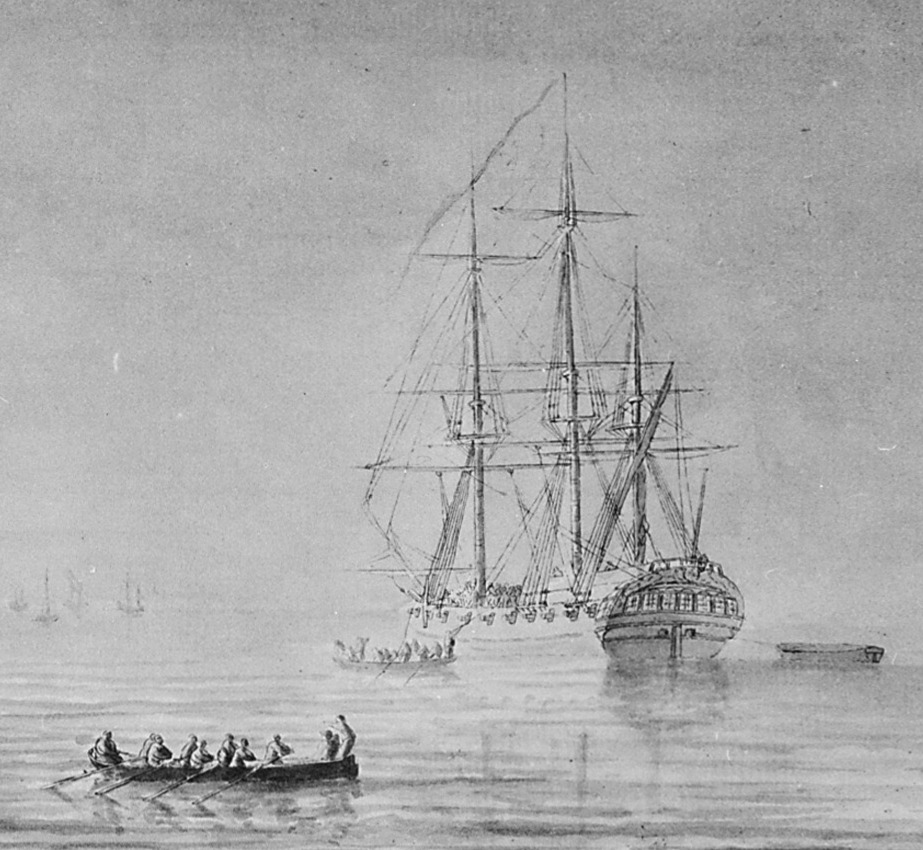
Captain James Wallace assisted in the capture of New York City in the summer of 1776. This contemporary drawing of the HMS Rose is from a larger drawing entitled, “The Phoenix and the Rose Engaged by the Enemy’s Fire Ships and Galleys on the 16 August, 1776” [on the Hudson River]. “Engraved from the Original Picture by D. Sevres from a Sketch of Sir James Wallace’s” (National Archives, Washington, D.C.)
With a squadron of several ships, Wallace was now confident of preventing most of the smuggling that had prevailed on the bay. The last six months of his patrols centered around obtaining supplies for troops in Boston and his own men. His ships travelled all around the bay, and as far as Fisher’s Island off the coast of Long Island, raiding coastal farming communities to take livestock and hay. He often paid for these supplies, so it was not outright theft, but these were hardly voluntary transactions. These depredations did nothing to secure the allegiance of residents to the empire.
In response, the General Assembly passed a law in August to remove all livestock from the islands except what was necessary for local subsistence. It excepted Aquidneck, probably to discourage Wallace from destroying Newport. Wallace nonetheless complained of these “treasonable acts,” but to no avail. The General Assembly went on to pass a law that excepting the town council of Newport, any person found guilty of supplying the enemy was to “suffer the pains of death, as in the case of felony, and forfeit his lands, goods, and chattels to the colony.”
Wallace had an impossible task, and his superiors surely misjudged the situation. As historian Nick Bunker has argued, the British foreign service was then dealing with many threats to the empire, from the Baltic Sea to the Caribbean. Not just New England, but all of the American colonies were less profitable than the sugar islands to their south.[11] It was probably inevitable that the British government officials in London hoped to solve the American problem with a military approach, while it worked on diplomacy for more valuable areas. That’s also part of the reason why the British largely ignored Rhode Island and the rest of New England after the shift to New York in 1779.
Notes
[1] See Peter Fay’s two articles in the Jamestown Press, “Brits Burn Buildings Across Island” and “Black Soldiers Stand Beside Britain, Dec. 18 and 24, 2025; Robert Grandchamp, “Rhode Island Militia Battles the Dreaded British Captain James Wallace on Prudence Island,” Nov. 2, 2017, The Online Review of Rhode island History, https://smallstatebighistory.com/rhode-island-militia-battles-dreaded-british-captain-james-wallace-prudence-island/. [2] Clarkson Collins, “The Patrol of Narragansett Bay (1774-76) by HMS Rose, Captain James Wallace,” Rhode Island History, in five parts (January 1949-April 1950). [3] Florence Parker Simister, The Fire’s Center: Rhode Island in the Revolutionary Era, 1763-1790 (Providence: Rhode Island Bicentennial Foundation, 1979), 71. [4] Collins, “The Patrol of Narragansett Bay,” Rhode Island History, April 1950, 56. [5] Christian McBurney, The Rhode Island Campaign, The First French and American Operation in the Revolutionary War (Yardley, PA: Westholme, 2011), 14-16. [6] See John Landry, “Why Did Rhode Island’s Merchants Resist Non-Importation in 1767?,” June 28, 2024, The Online Review of Rhode Island History, https://smallstatebighistory.com/why-did-rhode-island-merchants-resist-non-importation-in-1767/. [7] John Landry, “Did Rhode Island Matter in the American Revolution?” July 8, 2023, The Online Review of Rhode Island History, https://smallstatebighistory.com/did-rhode-island-matter-in-the-american-revolution/. [8] Collins, “The Patrol of Narragansett Bay,” Rhode Island History (July 1949), 79. [9] Ibid., 80. [10] Ibid., Rhode Island History (January 1950), 20. [11] Nick Bunker, An Empire on Edge: How Britain Came to Fight America (New York: Knopf, 2014), chapter 3.